The overwater bungalow represents an architectural anomaly, where the traditional boundaries between hospitality, marine engineering, and environmental conservation dissolve. At its most fundamental level, these assets are not simply rooms positioned above water; they are sophisticated, semi-permanent infrastructures that must endure high-salinity environments, tidal shifts, and the relentless mechanical stress of wave action. The allure of living at the water’s edge is undeniable, yet this aesthetic requires a massive commitment to industrial-grade maintenance and specialized construction techniques.
When one begins to examine these properties, it becomes apparent that the variance in quality is not merely decorative. It is structural. A hotel that relies on outdated pile-driving methods will suffer from foundation instability within a decade, whereas a facility designed with modern hydro-geological considerations will maintain its integrity for thirty years or more. Understanding this discrepancy is essential for anyone—from investors to planners—who seeks to grasp the reality behind the marketing imagery.
We must approach this study with a clear objective: to deconstruct the myths surrounding aquatic luxury and replace them with a grounded understanding of the engineering and logistics required to operate in such hostile environments. By shifting our focus from the superficial to the functional, we gain a far more accurate perspective on what makes one project superior to another.
Understanding “compare overwater hotels”
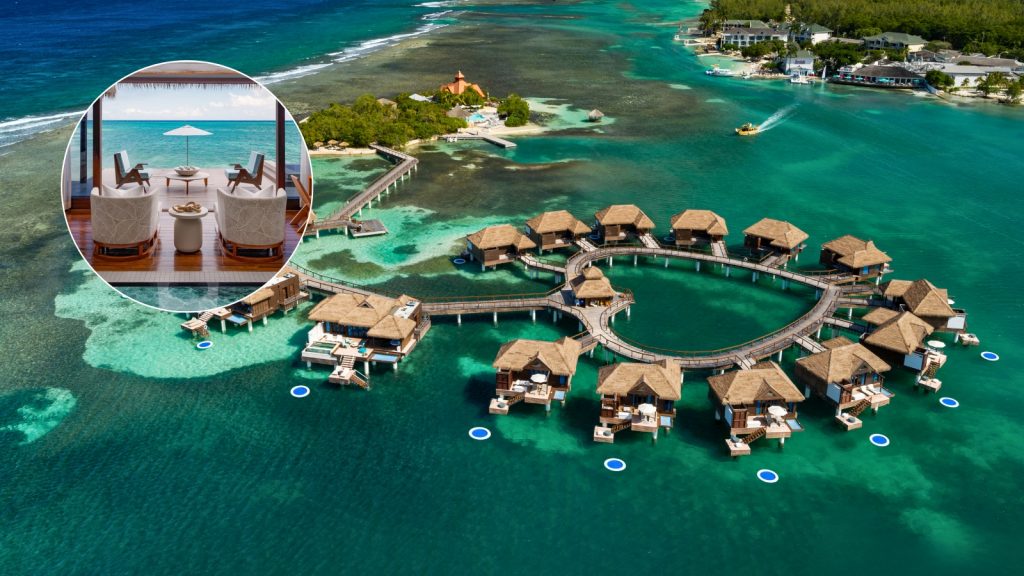
When professional observers compare overwater hotels, they often fall into the trap of analyzing aesthetic variables like interior square footage or the presence of a private plunge pool. This is a profound error in judgment. The true value of an overwater property lies in its foundational resilience, its utility-delivery efficiency, and the health of the marine ecosystem directly beneath the units. A resort that achieves high occupancy through clever marketing but neglects its sub-sea piping integrity will, within a short timeframe, face massive operational costs and reputational damage.
The act of assessment requires a multi-perspective approach. You must view the property through the lens of a marine engineer, a resort operator, and an environmental steward simultaneously. Misunderstandings are rampant; many believe that proximity to deep, clear water is the ultimate goal, ignoring the fact that deeper water often correlates with higher energy and greater structural risk. Oversimplification—treating these resorts as standard real estate developments—is the primary driver of failure in this sector. When you attempt to compare overwater hotels, you must look beyond the brochures to the structural design specs and the long-term maintenance ledger.
Furthermore, the “best” option is highly context-dependent. A design that succeeds in a protected, shallow-water lagoon in the Maldives is an expensive liability in the exposed, high-energy environment of a coastal island in the Pacific. Establishing a robust set of criteria—incorporating bathymetry, tidal flux, and logistical connectivity—is the only way to avoid the pitfalls of subjective, surface-level evaluation.
Historical and Systemic Evolution
The evolution of these structures has moved from vernacular, low-impact platforms to sophisticated, multi-story industrial habitats. Early builders used simple timber posts driven into the sand, an approach that was inherently short-lived and prone to biological degradation.
Modern developers now utilize high-tensile steel, carbon-fiber reinforcements, and advanced cathodic protection systems to mitigate the corrosive effects of saltwater. This systemic evolution reflects an industry-wide recognition that longevity is the ultimate measure of success. The transition from “bungalow as a hut” to “bungalow as a machine” is the defining narrative of the last fifty years, and it is a trajectory that continues to accelerate as architects integrate more renewable energy and self-contained waste management technologies into the design phase.
Conceptual Frameworks and Mental Models
To effectively evaluate these environments, one should apply the following frameworks:
-
The Utility-Logistics Tether: A project’s efficiency is inversely related to the length and complexity of its supply chains. Every meter of pipeline or conduit between the central plant and the furthest bungalow increases the probability of system failure.
-
The Benthic Impact Ratio: A calculation of the building’s footprint relative to the surrounding healthy coral coverage. High-performance projects prioritize minimizing this ratio through advanced, low-impact foundation designs.
-
The Corrosion-Resilience Hierarchy: A classification of building components based on their exposure to the marine environment. Components are ranked by their expected replacement frequency, allowing managers to anticipate capital needs years in advance.
These models allow stakeholders to systematically compare overwater hotels without getting lost in the noise of subjective aesthetic marketing.
Key Categories and Structural Variations
The following table summarizes the primary construction archetypes and their functional trade-offs:
| Category | Structural Foundation | Primary Operational Benefit | Key Vulnerability |
| Lagoon-Fixed | Driven Timber/Steel | High stability | Sediment erosion |
| Deep-Water Stilt | Deep-Driven Concrete | Expansive views/Marine access | Structural harmonics |
| Floating/Modular | Buoyant Chassis | Dynamic water-level management | Motion stability/Maintenance |
| Island-Extension | Reclaimed/Artificial | Easy utility routing | Ecological habitat loss |
Realistic decision logic dictates that project success depends on aligning these archetypes with local geomorphology. Choosing a floating design in a high-current area, for instance, introduces mechanical complexities that often outweigh the convenience of the modular structure.
Detailed Real-World Scenarios
-
The High-Current Constraint: A developer chooses a standard pile-foundation for a lagoon with strong tidal currents. The cross-currents create significant lateral pressure, causing the pilings to sway and the utility lines to shear. The failure mode here is a structural oversight that necessitates a full, costly retrofit.
-
The Sediment-Shift Scenario: A property is built over a sandy lagoon floor. Over time, the movement of the tide shifts the sediment, exposing the base of the piles and creating “scouring” that compromises the integrity of the bungalow. The corrective action requires complex underwater grout injection.
-
The Service-Hub Delay: A project is designed with extreme distances between the resort center and the farthest units. During peak season, the logistics of food and supply delivery fail, leading to significant drops in guest satisfaction and high turnover among staff who are tasked with long, inefficient transit times.
Planning, Cost, and Resource Dynamics
The economic profile of these assets is distinct from any other hospitality segment. Initial capital outlays for marine-grade construction are exorbitant, often double or triple that of an equivalent land-based structure.
| Resource Category | Cost Volatility | Long-Term Risk Profile |
| Marine Foundation | High | Structural failure/Collapse |
| Utility Infrastructure | Moderate | Systemic leak/Contamination |
| Corrosion Protection | Low (if planned) | Material fatigue/Rust |
| Environmental Monitoring | Low | Compliance/Reputational |
Opportunity costs are also significant. A developer who invests in a “cheaper” design inevitably faces a compounding cost of maintenance that eventually cannibalizes the annual net operating income of the resort.
Tools, Strategies, and Support Systems
-
Hydro-Geotechnical Surveys: Mandatory for identifying sub-surface soil densities before driving any piles.
-
Autonomous Monitoring Drones: Used for regular, non-invasive visual inspections of the submerged bungalow structure.
-
Modular Component Replacement Cycles: Replacing specific, high-wear parts on a set schedule rather than waiting for failure.
-
Integrated Waste-Management Loops: Closing the loop to prevent effluent leakage, which is the fastest way to destroy the property’s asset value.
Risk Landscape and Failure Modes
Risk in this industry is rarely a single, catastrophic event. It is usually a slow, compounding decline. The taxonomy of risk includes Mechanical Fatigue (the wear and tear of the building itself), Benthic Degradation (the loss of the ecosystem), and Operational Friction (the visible failure of support services). When these risks converge, they create a “death spiral” where the resort’s revenue drops, leading to deferred maintenance, which further accelerates the damage to the infrastructure.
Governance, Maintenance, and Long-Term Adaptation
A successful resort requires an almost obsessive approach to governance. This includes:
-
The Layered Checklist: A system that mandates inspections at the structural, utility, and environmental levels on staggered, rotational frequencies.
-
Adjustment Triggers: Pre-defined thresholds (e.g., specific salinity levels in pipe conduits) that automatically trigger a maintenance audit.
-
Long-Term Adaptation: Designing the structures to be “modular-ready,” meaning they can be raised, moved, or updated as sea levels and storm intensities change over the coming decades.
Measurement, Tracking, and Evaluation
Evaluation must prioritize objective data over guest feedback, though the latter is a useful lagging indicator.
-
Leading Indicators: Structural vibration sensors, corrosion-monitoring probes, and local water clarity metrics.
-
Lagging Indicators: Repair cost-to-revenue ratios, staff efficiency metrics in service delivery, and the longevity of materials between replacement cycles.
Documentation examples include a “Structural Integrity Log,” a “Marine Ecosystem Health Report,” and an “Operational Logistics Audit.” These allow managers to compare overwater hotels objectively based on actual, rather than perceived, performance.
Common Misconceptions and Oversimplifications
-
Myth: All overwater hotels are “green.” Reality: They are only as green as their waste processing and energy systems permit.
-
Myth: Wood is the preferred material for luxury. Reality: In saline environments, engineered high-performance composites are often more sustainable and durable than wood.
-
Myth: Deep water is always better. Reality: Deep water presents significantly more engineering and safety challenges than protected, shallow lagoon environments.
Ethical and Contextual Considerations
The ethical dimension is paramount. As developers increasingly encroach on fragile reefs, the responsibility to act as stewards of that environment is not optional. A resort that fails to actively monitor and protect the ecosystem beneath its bungalows is ultimately working against its own financial interests. The most successful projects are those that engage in active reef restoration, as this reinforces the very feature that justifies the price of the accommodation.
Conclusion
The endeavor to build, operate, or simply compare overwater hotels is a study in extreme discipline. It is a sector that rewards those who prioritize engineering over optics, and stewardship over expansion. The inherent challenge of these properties—that they are temporary structures in a permanent, powerful marine environment—is the source of both their value and their risk. By maintaining an analytical, long-term perspective and committing to rigorous, data-driven governance, one can navigate this landscape successfully, creating assets that are as resilient as they are beautiful.