The overwater bungalow represents a high-stakes convergence of luxury hospitality and precarious marine engineering. Far from being a simple, elevated hotel room, these structures function as semi-autonomous habitats situated in the most demanding environments on Earth. The allure of the lagoon is powerful, but it often blinds both developers and travelers to the systemic realities of building on—and living above—the tide. Success in this field requires an analytical understanding of how these properties integrate with their local ecology, energy grids, and logistical support networks.
When projects fail or guest experiences dissolve, it is rarely due to a single catastrophic error. It is typically the result of compounding misjudgments that occur during the planning, construction, or operational phases. A bungalow that is aesthetically perfect may hide a failing foundation or an unsustainable waste management system. Recognizing these hidden vulnerabilities is the first step toward operational mastery and, for the traveler, the key to informed decision-making.
This article serves as an authoritative dissection of the structural, operational, and financial pitfalls that define the sector. By exploring the taxonomy of failure, we move past the polished marketing veneer to examine the technical and logistical foundations of overwater resorts. Understanding these complexities is essential for anyone who seeks to navigate this environment with intelligence, avoiding the structural and service-related traps that have compromised so many high-profile projects.
Understanding “common overwater hotels mistakes”
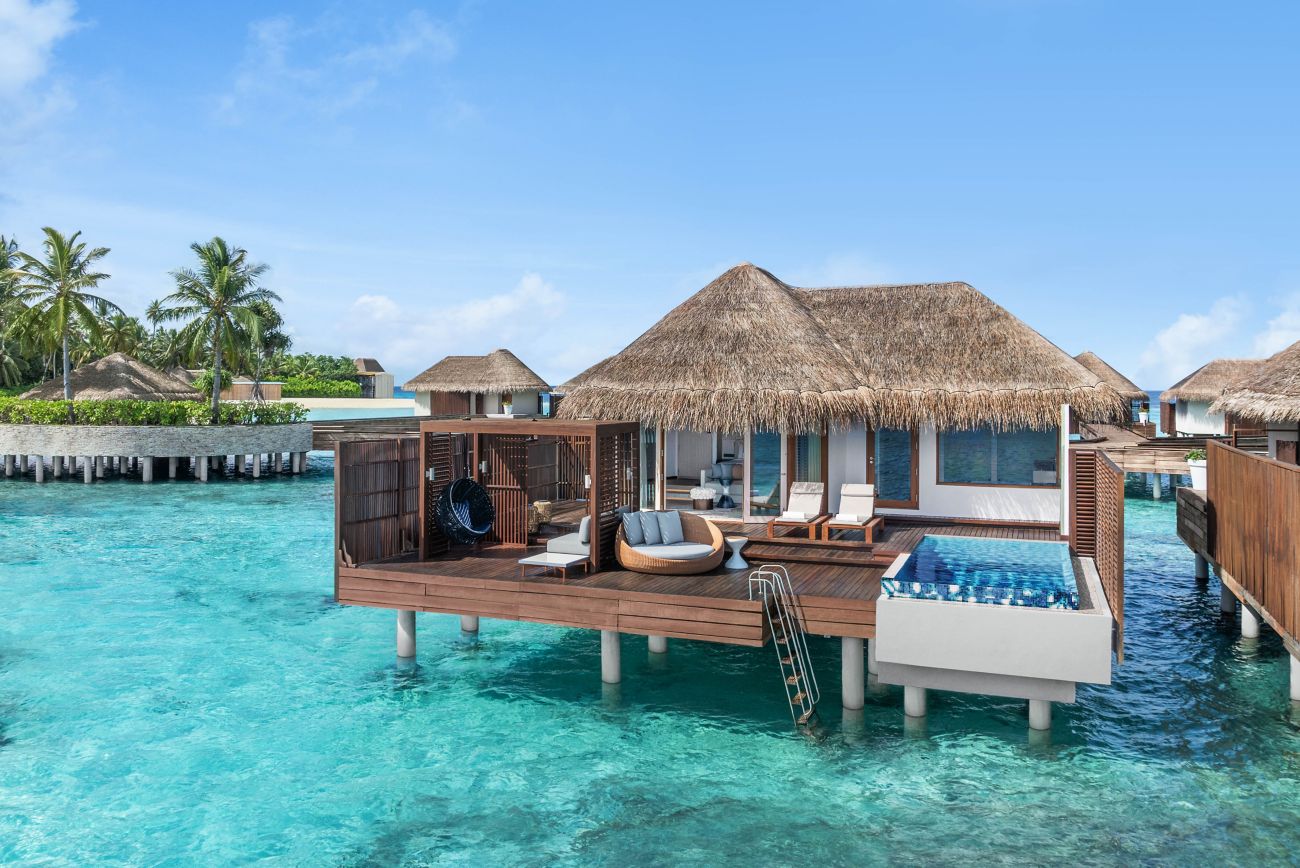
The identification of common overwater hotels mistakes necessitates a broad perspective that spans from the architect’s drafting table to the daily maintenance ledger of the resort operator. Many of these errors stem from a shared failure: the oversimplification of the marine environment. Investors frequently treat these resorts as standard land-based hotels, underestimating the logistical friction and the high-energy nature of the ocean. This oversight ignores the fact that every meter of pier and every sub-sea conduit adds to the property’s risk profile. When planners ignore the bathymetry or tidal flux of a site, they are essentially building a systemic vulnerability into the resort’s foundation.
For the traveler, the errors are similarly grounded in a lack of contextual awareness. When potential guests look for property options, they often prioritize superficial markers—such as the presence of a glass-bottom floor—over critical indicators like the resort’s environmental management record or the maintenance cycle of the units. This creates a market where properties can thrive on branding while failing to address structural decay. Therefore, understanding the common overwater hotels mistakes is an exercise in skepticism; it requires moving beyond the image to assess whether the property is capable of delivering on its promises over the long term.
Oversimplification also leads to the “logistical bottleneck” error. This is the assumption that a hotel service model (like room service or waste management) can be mapped directly onto an overwater array without consequence. In reality, the distance to the unit acts as a force multiplier for inefficiency. If a bungalow is situated at the terminus of a long pontoon, the cost, time, and environmental impact of providing standard services are magnified significantly.
Historical and Systemic Evolution
The evolution of overwater hospitality has shifted from vernacular hut-inspired designs to heavy, industrial-grade marine infrastructure. Early developers viewed these projects as low-impact experiments, often employing primitive piling and foundation techniques that were fundamentally incompatible with the long-term needs of a resort. As these structures aged, the hidden costs of this “experimental” phase emerged: structural rot, foundation settling, and catastrophic utility failures.
Today, the industry is in a phase of professionalization. Designers now use advanced, corrosion-resistant composites and hydro-geological modeling to ensure that the resorts of the current era can survive the accelerating impacts of climate change, including storm surges and rising water levels.
Conceptual Frameworks and Mental Models
To analyze the risk profile of these assets, one must utilize several core frameworks:
-
The Utility-Tether Principle: Every overwater unit is a dependent variable of the main resort grid. The longer the tether, the higher the risk of failure. Resilience is maximized when utility systems are decentralized or when units are clustered around localized hubs.
-
The Benthic Impact Ratio: A measure of the structural footprint relative to the health of the coral lagoon. Projects that exceed a certain ratio inevitably degrade their primary asset—the water quality—leading to the eventual loss of the property’s market appeal.
-
The Corrosion-Cycle Hierarchy: A model that classifies every structural element by its maintenance frequency. Operators who manage these cycles proactively effectively “hedge” against the compounding cost of rust and structural decay.
Key Categories of Structural and Operational Failure
The failures of these properties typically fall into six distinct categories:
| Failure Category | Primary Driver | Second-Order Effect |
| Foundation/Piling | Incorrect site analysis | Structural harmonics/settling |
| Environmental/Benthic | Stagnant water flow | Algae bloom/loss of biodiversity |
| Utility/Mechanical | Decentralized supply lines | Inefficient waste processing |
| Operational/Service | Extreme distance from hub | Service lag and degradation |
| Material/Corrosion | Salt-exposure neglect | Catastrophic structural rot |
| Governance/Audit | Deferred maintenance | Cumulative asset death spiral |
Deciding how to address these requires a clear-eyed look at the resort’s master plan. For instance, a property that has been “extended” beyond its original hydrological design will almost certainly suffer from sediment buildup and water stagnation.
Detailed Real-World Scenarios
-
The Hydrodynamic Bottleneck: A resort adds a large pier section without mapping current flow. This creates a “dead zone” behind the bungalows. The stagnation leads to an odor problem that drives away guests, permanently ruining the reputation of that wing of the property.
-
The Maintenance Blind Spot: An operator neglects the cathodic protection on steel piles because the costs are high and the damage is invisible. Within a decade, the piles lose 40% of their structural integrity, forcing a multi-million-dollar emergency reinforcement.
-
The “Luxury” Logistical Trap: A resort promotes the “seclusion” of units located 500 meters from the central hub. The cost of labor to deliver hot food across this distance makes the service unsustainable, leading to mediocre dining experiences that undermine the resort’s premium pricing.
Planning, Cost, and Resource Dynamics
The economic profile of these assets is characterized by non-linear costs. Initial capital expenditure is massive, but it is often overshadowed by the “maintenance debt” that accumulates if the property is not managed with extreme rigor.
| Cost Component | Relative Impact | Variability Factor |
| Marine Engineering/Piling | High | Very High (Substrate/Depth) |
| Corrosion/Structural Maintenance | Very High | Constant (Predictable) |
| Environmental Monitoring | Moderate | Constant |
| Logistics/Staffing | Moderate | Very High (Distance) |
Recognizing these dynamics is the first step in avoiding common overwater hotels mistakes. The goal is to move from reactive “firefighting” to a model of preventative asset care.
Tools, Strategies, and Support Systems
-
Bathymetric and Current Mapping: Non-negotiable for any structural expansion.
-
Cathodic Protection Sensors: Tracks the rate of steel oxidation in real-time.
-
Hydrodynamic Simulation Modeling: Predicts how structures affect water currents before they are built.
-
Integrated Waste-Management Loops: Prevents the environmental catastrophe of effluent leakage into the lagoon.
Risk Landscape and Failure Modes
Risk is cumulative. A minor failure in a sub-sea conduit may seem inconsequential, but if it allows saltwater to enter a non-protected electrical junction, the result is a fire or power failure. The taxonomy of risk should categorize every failure mode by its impact on life safety, asset integrity, and reputational equity.
Governance, Maintenance, and Long-Term Adaptation
A successful resort operates on a “Living Ledger.” This ledger tracks every physical component of the overwater bungalow array. Governance cycles should include:
-
Weekly Physical Audit: Inspection of piling base and waterline connections.
-
Quarterly Water Quality Assessment: Ensures the flushing system is functioning.
-
Annual Structural Load Test: Professional audit of foundational load-bearing capacity.
Measurement, Tracking, and Evaluation
-
Leading Indicators: Changes in current speed, salinity levels in structural voids, and localized water-clarity metrics.
-
Lagging Indicators: Repair frequency vs. occupancy rate, and net promoter scores (NPS) specifically related to the “freshness” of the physical plant.
-
Documentation Example: The “Structural Integrity Map,” which overlays maintenance reports onto a digital floor plan of the entire bungalow array.
Common Misconceptions and Oversimplifications
-
Myth: Natural materials are always better. Reality: Engineered, marine-rated composites often outperform wood by an order of magnitude in corrosive environments.
-
Myth: Density is the primary driver of profit. Reality: High density without hydrological modeling destroys the asset’s value.
-
Myth: Seclusion is a free amenity. Reality: Seclusion is a high-cost operational burden that must be priced into the unit.
Ethical and Contextual Considerations
The ethical dimension is clear: these resorts occupy a fragile space. If the development does not actively contribute to the restoration or preservation of the lagoon, it is operating on borrowed time. The common overwater hotels mistakes often involve the short-term exploitation of a site’s natural beauty, which is ultimately a self-defeating financial strategy.
Conclusion
The architecture of the overwater bungalow is a testament to human ambition, yet it is also a reminder of our vulnerability. The errors that compromise these projects are rarely matters of style; they are matters of substance—engineering failures, logistical oversights, and a disregard for the long-term ecological impact of construction. To build or stay in these environments requires more than an appreciation for the view; it requires a rigorous, analytical respect for the forces at play. By mastering the systemic realities of aquatic infrastructure, stakeholders can ensure their resorts remain as enduring as they are iconic.