The overwater bungalow is an architectural paradox. It provides the comforts of a five-star hotel while existing in a state of suspended vulnerability above the tides. When couples seek the best overwater hotels for honeymooners, they are often pursuing an experience that blends high-end seclusion with a direct, immersive connection to the marine environment. These structures, however, are far more than aesthetic retreats. They are complex, semi-permanent infrastructures. They must reconcile the fragility of delicate coral lagoons with the demanding industrial requirements of luxury service.
Evaluating these environments necessitates a transition from standard travel assessment to a more nuanced appreciation of structural integrity, tidal dynamics, and the psychological impact of living at the water’s edge. Investors, developers, and discerning travelers alike often underestimate the sheer operational intensity required to maintain the illusion of seamless isolation. Beneath the serene design of a world-class resort lies a rigorous network of desalination, waste management, and pile-foundation maintenance that determines the longevity and sustainability of the property.
Consequently, selecting an elite overwater project for a honeymoon requires a deep understanding of the intersection between high-end hospitality and extreme environmental conditions. This guide dissects the technical, financial, and experiential layers that define the category. By examining these structures through a lens of systematic planning and long-term viability, one can move past the surface-level marketing appeal and address the functional requirements necessary to maintain a reputation for excellence in one of the most unforgiving, yet sought-after, hospitality niches.
Understanding “best overwater hotels for honeymooners”
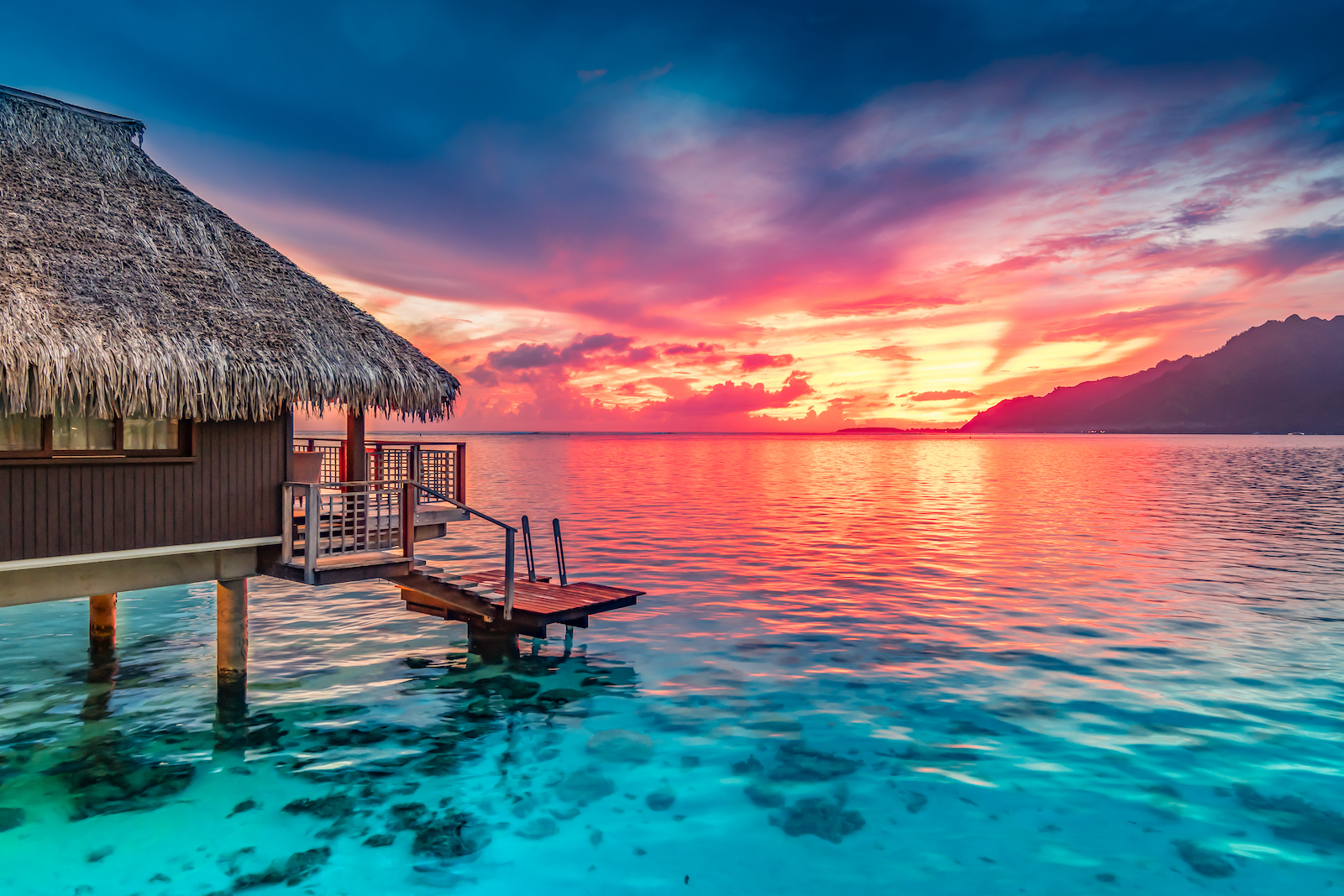
The term best overwater hotels for honeymooners is frequently used in travel discourse, yet it remains poorly defined. At its core, the concept refers to the holistic strategy—encompassing site selection, architectural engineering, and guest experience design—that elevates a standard bungalow into a world-class honeymoon destination. When travelers search for these properties, they are often hunting for environments that balance the aesthetic of transparency with the structural rigidity required for typhoon-prone zones or high-current lagoons.
A common misunderstanding is that these experiences are modular or universal. In reality, the most successful properties are highly customized to their specific micro-climates. A resort optimized for the calm, shallow lagoons of the Maldives will catastrophically fail in the deeper, more turbulent waters of the Caribbean. True top-tier honeymoon destinations must account for bathymetry, reef health, and local maritime legislation. Oversimplification—treating these structures as mere extensions of land-based hotel design—is the primary driver of project decline, leading to accelerated maintenance costs and diminished guest privacy.
Furthermore, these plans must integrate the human element: the supply chain required to move materials, energy, and waste across a bridge or via boat to a structure that is fundamentally isolated. The efficacy of a resort is measured not by the visual impact of the initial build, but by the performance of the asset over a 15-to-20-year lifecycle. Honeymooners, in particular, rely on the consistency of this performance. They expect that the “uninterrupted” nature of their stay is supported by invisible, highly efficient mechanical systems.
Historical and Systemic Evolution
The trajectory of overwater architecture has been marked by a shift from vernacular, lightweight construction to industrial-grade luxury. Initially popularized in the 1960s, these structures were minimalist, utilizing simple timber piles and thatched roofs. However, as the market demand for “barefoot luxury” intensified, the scope expanded. The shift toward permanent, concrete-based, or high-density timber structures forced developers to address complex issues such as seabed erosion, thermal insulation, and fire suppression in remote, high-risk locations.
Systemically, this has led to a requirement for more robust master planning. Early projects were often expanded organically, leading to haphazard “spaghetti” layouts that hindered water flow and created stagnant zones within the lagoon. Modern planning standards now prioritize fluid dynamics and environmental connectivity, ensuring that the presence of the structures does not destroy the very natural assets that justify their premium pricing.
Conceptual Frameworks and Mental Models
To effectively navigate this space, one should apply several conceptual lenses:
-
The Marine-Integrity Model: This framework posits that the structure must always remain secondary to the ecosystem. If the marine life, water clarity, or coral health degrades, the project’s value proposition vanishes. Plans that do not include comprehensive biological impact assessments at the design stage are inherently flawed.
-
The Logistical Tether Principle: Regardless of how isolated the bungalow feels, it is physically tethered to a support hub. The efficiency of a project can be modeled by the distance and connectivity between the guest room and the utility core (water, electricity, waste, supply). The greater this distance, the higher the operational friction.
-
The Maintenance-Cycle Hierarchy: Not all components are equal. Piles that are submerged are subject to different stressors than the decking, which is subject to different stressors than the roof. A viable plan categorizes materials based on their specific failure cycles, ensuring that critical maintenance does not require the evacuation of the entire property.
Key Categories and Structural Variations
| Category | Typical Structural Basis | Primary Honeymoon Appeal | Operational Complexity |
| Lagoon-Calm | Timber/Lightweight | Uninterrupted views | Low |
| Deep-Water/Stilt | Reinforced Concrete | Privacy/Marine depth | High |
| Floating/Pontoon | Buoyant Modules | Adaptability | Very High |
| Artificial Island | Land-Reclamation Base | Hybrid experience | Extreme |
When evaluating these, the choice is rarely about aesthetics alone. A floating module may offer the best environmental resilience, but it creates “motion sickness” risks and challenges with utility connection stability that can alienate certain market segments.
Detailed Real-World Scenarios
Consider a scenario where a developer attempts to retro-fit a luxury standard into an area with high tidal variance. The decision logic dictates that standard pile foundations will be insufficient. The engineering cost must double to account for deeper drilling and specialized, anti-corrosive bracing. If the developer fails to adjust the budget, the result is a structural compromise that will manifest as creaking, vibration, or eventually, total structural instability during seasonal storms.
Another scenario involves waste management. In an elite setting, the cost of sub-sea piping for sewage is immense. Some developers choose decentralized septic units under each unit to save costs. This is a common “failure mode,” as these units require frequent human intervention, leading to staff traffic that destroys the privacy the couple paid to experience. Effective planning necessitates a centralized, automated waste processing system, despite the higher initial capital expenditure.
Planning, Cost, and Resource Dynamics
The economic reality of these properties is defined by high entry costs and steep maintenance curves. Unlike land-based assets, the “cost per square meter” of overwater construction often includes heavy maritime engineering fees and logistical premiums for specialized labor.
| Resource Factor | Impact on Budget | Long-Term Risk |
| Structural Materials | 30–40% Premium | Corrosive degradation |
| Logistics/Supply | 20% Variable | High disruption risk |
| Environmental Permits | High (Upfront) | Regulatory shifts |
| Maintenance Labor | Ongoing (High) | Talent scarcity |
Investors should budget for a 15% annual increase in maintenance costs for every year past the five-year mark, as the cumulative effect of salt and moisture begins to tax the mechanical systems.
Risk Landscape and Failure Modes
The primary risks are not just financial—they are environmental and reputational. Compounding risks occur when an environmental failure (e.g., a localized algae bloom caused by poor waste management) triggers a reputational loss, which leads to reduced occupancy, which in turn leads to budget cuts for maintenance. This is the “death spiral” of a luxury property. Taxonomically, these risks are categorized into:
-
Structural Fatigue: The literal wearing down of supports.
-
Environmental Degradation: The loss of the “view” or the “experience.”
-
Operational Friction: The visible intrusion of service into the guest experience.
Governance, Maintenance, and Long-Term Adaptation
Effective management requires a layered checklist approach. Weekly inspections of pile integrity, monthly water quality testing at various points in the lagoon, and annual structural audits are non-negotiable. Furthermore, property management must include an adaptation strategy for climate change. As sea levels rise and storm intensities shift, these structures must have a “graceful failure” or upgrade path—where the structure can be raised or reinforced without necessitating a total teardown.
Measurement and Qualitative Assessment
Evaluation is not solely quantitative. While revenue per available room (RevPAR) is a standard metric, in this space, one must also track “Environmental Health Indicators” (EHI).
-
Leading Indicators: Staff reports of structural creaking, early signs of wood rot, changes in local marine visibility.
-
Lagging Indicators: Repair costs relative to revenue, repeat-visitor sentiment regarding the “pristine” nature of the water.
Documentation should include detailed logs of every maintenance intervention, indexed by the location of the unit. This creates a data-rich map of how different sections of the property interact with local current and wind patterns.
Addressing Common Misconceptions and Oversimplifications
-
Myth: Overwater bungalows are environmentally friendly. Reality: They can be, but only with massive, deliberate investment in green technology and site-sensitive design.
-
Myth: The more wood, the better the luxury. Reality: In high-salinity environments, excessive timber without industrial-grade sealing is a maintenance nightmare.
-
Myth: They are “permanent” structures. Reality: They are, at best, semi-permanent assets that require a scheduled end-of-life plan.
-
Myth: All water villas are private. Reality: Proximity to common areas and walkways often dictates the actual level of isolation a couple will experience.
Conclusion
The pursuit of excellence in this sector is a rigorous exercise in balance. It requires the developer to act simultaneously as a hotelier, a marine engineer, and a steward of the environment. The best overwater hotels for honeymooners are not merely blueprints for a structure; they are long-term commitments to managing the interplay between high-density human luxury and the fragile, dynamic edge of the sea. By focusing on the structural, logistical, and environmental realities—rather than the fleeting appeal of the visual—one can build a property that remains an authority in the field, resilient to both the tides and the pressures of time.