Modern professionals have fundamentally altered the geography of the work world. As location independence grows, the digital nomad cohort now actively seeks environments that balance high-functioning infrastructure with profound physical serenity. Among these settings, the overwater bungalow—once the exclusive domain of the leisure traveler—has emerged as a complex destination for the remote worker. This shift represents more than an aesthetic preference; it signals a convergence of high-speed connectivity demands and the pursuit of environments designed for deep work, or what some observers categorize as concentrated cognitive flow.
However, the intersection of luxury hospitality and professional utility creates hidden friction. While an overwater villa offers a visually arresting backdrop, it often functions as a hostile environment for the digital professional. Signal degradation, high humidity levels, lack of ergonomic furniture, and the isolation inherent in remote island logistics create a significant delta between the promise of a picturesque workspace and the reality of daily output. To bridge this gap, one must move beyond the superficial allure of visual media and evaluate resorts through the lens of operational endurance.
True success in this nomadic niche requires the rigorous application of criteria that prioritize systemic reliability over aesthetic novelty. This article serves as a foundational inquiry into the feasibility, logistics, and strategic selection of environments that support sustained professional performance while suspended above the water. Consequently, it eschews the typical travelogue perspective, focusing instead on the architectural, technological, and environmental constraints that define the professional experience in these unique settings.
Understanding the best overwater hotels for digital nomads
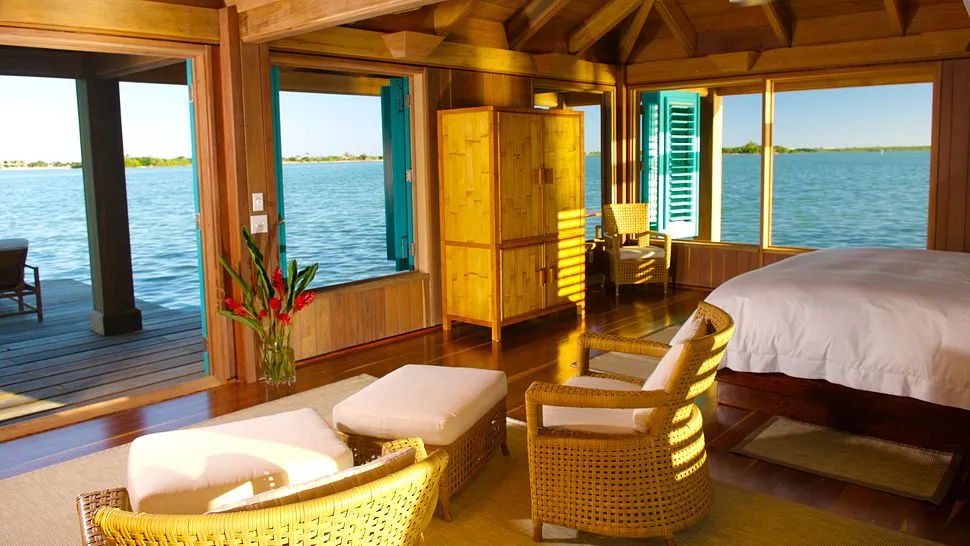
Many observers frequently undermine the quest to identify the best overwater hotels for digital nomads by oversimplifying both luxury and utility. Prospective travelers often equate high price points with high functionality, assuming that an expensive resort implies high-speed, low-latency internet, stable electricity, and ergonomic workspaces. This assumption represents a primary failure mode. High-end hospitality historically serves those seeking disconnection, relaxation, and the suspension of time—all of which contrast sharply with the needs of a digital professional engaged in global commerce.
One must analyze the best overwater hotels for digital nomads as hybrid facilities. Effectively, these resorts function as micro-infrastructure projects. A hotel that excels for a vacationer may fail completely for a software engineer, a consultant, or a digital creator. Furthermore, the primary misunderstanding involves the belief that connectivity exists as a binary state; in reality, for a professional, it forms a spectrum of latency, bandwidth stability, and redundancy. Because salt air, high UV, and ambient noise plague the physical environment of an overwater structure, the professional requires a level of hardware resilience and logistical support that marketing materials rarely highlight.
Defining this category requires that one shifts the focus from aesthetic beauty to functional capability. A property that provides a dedicated, climate-controlled, ergonomically sound office space while maintaining the aesthetic qualities of an overwater villa creates significantly more value than one that forces a guest to work from a lounge chair. Therefore, identifying the best overwater hotels for digital nomads necessitates a deep dive into the operational backbone of these resorts, as one must look for indicators of professional intent rather than mere leisure appeal.
The Systemic Evolution of Remote-Capable Luxury
Historically, the overwater bungalow emerged as a product of limited land mass, particularly in the South Pacific. Engineers developed these structures to solve the problem of spatial scarcity, prioritizing proximity to the marine environment without considering electrical or telecommunications density. As remote work evolved from a niche practice into a global professional standard, the hospitality industry underwent a slow, reactive shift.
Initially, resort operators viewed the laptop user as an annoyance—someone who cluttered the lobby or demanded bandwidth for video calls that the local satellite link could not support. However, the economic weight of the nomadic class has forced a re-evaluation. Modern properties now integrate dedicated fiber-optic feeds, UPS (Uninterruptible Power Supply) systems for critical infrastructure, and business-focused suites. Currently, we reside in a transition period where the legacy model of “digital detox” struggles against the rising demand for “digital immersion.” Because this evolution remains fragmented and localized, the success of the remote worker depends heavily on the individual owner’s foresight and the local government’s investment in submarine cable infrastructure.
Conceptual Frameworks for Evaluating Remote Infrastructure
To navigate the market effectively, one must employ specific mental models. Relying on aggregate reviews or marketing copy provides insufficient data for high-stakes decision-making.
-
The Latency-Throughput-Redundancy (LTR) Framework: A professional must ascertain not just the download speed, but the latency (ping) and the existence of a secondary, independent ISP. In remote island contexts, providers often suffer from single points of failure.
-
The Thermodynamic Work-Environment Model: Overwater structures naturally attract intense solar gain and experience high humidity. If the HVAC system fails to maintain a consistent ambient temperature, hardware will throttle or crash, and the user will suffer from cognitive fatigue induced by heat stress.
-
The Logistics-Autonomy Nexus: This model measures the level of independence from the resort’s hospitality services. A professional must determine if they can solve their own issues, or if they rely entirely on a concierge who may not understand the urgency of a technical outage.
-
The Ergonomic Baseline: A professional must assess if the property offers a desk that allows for neutral spine alignment, rather than simply accepting the standard decorative vanity table.
Categorizing the Remote-Ready Overwater Experience
Not all overwater experiences offer the same utility. They fall into distinct categories, each presenting inherent trade-offs for the worker.
| Category | Typical Connectivity | Ergonomic Setup | Primary Trade-off |
| The Corporate Hybrid | High-speed fiber | Dedicated office | Higher cost/less isolation |
| The Remote Boutique | Starlink/Satellite | Variable | Unpredictable uptime |
| The Barefoot Luxury | Low | Minimal | High distraction |
| The Tech-Focused Resort | Redundant fiber | Ergonomic | Higher ambient noise |
The best overwater hotels for digital nomads generally fall into the “Corporate Hybrid” or “Tech-Focused Resort” categories. These properties understand that their survival in the modern market depends on facilitating the professional success of their guests.
Scenario-Based Planning and Risk Mitigation
Consider a professional managing a high-stakes deployment during a stay at a remote overwater resort.
The Failure Mode: A sudden, localized storm causes a temporary power oscillation, which trips the resort’s secondary grid. If the guest’s hardware lacks adequate battery backup and they rely solely on the resort’s Wi-Fi, the resulting downtime can destroy project timelines.
The Mitigation: A proactive nomad carries a portable power station, a local SIM card with a high-gain cellular antenna (if coverage permits), and has already vetted the resort’s internal IT department. They recognize that the best overwater hotels for digital nomads are those that provide transparency regarding their power and network failover protocols. Ultimately, planning for the “total loss of services” scenario serves as the baseline requirement for responsible remote work in high-stakes environments.
The Economics of High-End Nomadic Productivity
The cost of working from an overwater villa extends far beyond the nightly rate. It encompasses a complex ecosystem of direct and indirect expenses.
-
Direct Costs: Accommodation, premium internet upgrades, and dedicated power conditioning equipment.
-
Indirect Costs: Productivity loss due to environmental acclimatization, hardware degradation from salt-air exposure, and the cost of “buffer” days added to itineraries to account for potential technical downtime.
For professionals, the best overwater hotels for digital nomads represent an investment in sustained output. Therefore, the cost must be weighed against the potential gain in cognitive performance facilitated by the change in environment, provided the underlying infrastructure remains robust enough to prevent the “hidden tax” of constant troubleshooting.
Technical Strategies for Connectivity and Hardware Preservation
Preserving hardware in an overwater environment requires an understanding of material science, as salt air corrodes metal components rapidly.
-
Corrosion Mitigation: Keep all devices in pressurized, sealed cases when not in use. Use silica gel packs to manage internal humidity.
-
Network Redundancy: Never rely on a single connection. The best overwater hotels for digital nomads usually allow guests to install temporary private networking equipment if required.
-
Power Conditioning: High-end sine-wave power conditioners remain non-negotiable. These devices protect delicate sensitive electronics from the dirty power that island generators often provide.
The Taxonomy of Failure: Risk Landscape and Operational Hazards
Failure in this context usually compounds. It rarely results from a single catastrophic event; instead, it starts with a series of minor inconveniences—a flickering light, a sluggish connection, a missing adapter—that slowly erode the professional’s ability to maintain focus.
-
Environmental Compounding: Humidity, salt, and heat lead to rapid hardware fatigue.
-
Infrastructure Isolation: Being physically isolated on a stilt structure means that the nomad cannot easily access a coworking space if the local internet fails.
-
Cognitive Load: The constant mental effort required to maintain a functional workspace in a non-standard environment acts as a drag on creative and analytical output.
Governance and Long-Term Adaptation of the Remote Workspace
A professional’s approach to these environments must remain cyclical. Specifically, it requires a review phase. Post-stay, the nomad should conduct an honest audit of the environment’s performance. Did the resort meet the connectivity claims? Was the ergonomic setup as advertised? Documenting these findings not only builds a personal knowledge base but also forces the nomad to refine their criteria for future selection, ensuring that their standards for the best overwater hotels for digital nomads remain continuously updated based on empirical evidence rather than speculative marketing.
Conclusion: Synthesizing Comfort and Utility
The pursuit of the best overwater hotels for digital nomads constitutes an exercise in balancing the profound psychological benefits of an immersive natural environment with the rigid requirements of high-level professional output. It is not a lifestyle choice that a professional can make lightly. Rather, it demands a high degree of technical literacy, a cautious approach to infrastructure, and a clear understanding that in the remote world, the environment functions as a critical tool that the worker must master. By applying rigorous standards and maintaining a skeptical view of hospitality marketing, the digital nomad can successfully leverage these unique locations to enhance both their professional productivity and their quality of life.