The modern corporate retreat has moved beyond the transactional necessity of a city-center hotel. For high-stakes leadership alignment, intensive strategy sessions, or the kind of radical team bonding that only physical detachment can foster, the choice of venue serves as both a backdrop and a catalyst. Among these, the overwater resort stands in a category of its own. It provides a unique architectural isolation that effectively dissolves the traditional barriers of a workplace, creating a “clean slate” environment where hierarchy is secondary to shared experience.
Yet, selecting the right venue is a complex exercise in risk management and logistical precision. The very features that make these locations desirable—their remoteness, their marine-centric infrastructure, and their focus on seclusion—also introduce significant hurdles. A successful retreat in such an environment requires more than a high-end booking; it requires a rigorous assessment of connectivity, sustainability, and the physical constraints of operating on a platform suspended between the sky and the sea.
Understanding “best overwater hotels for corporate hosting”
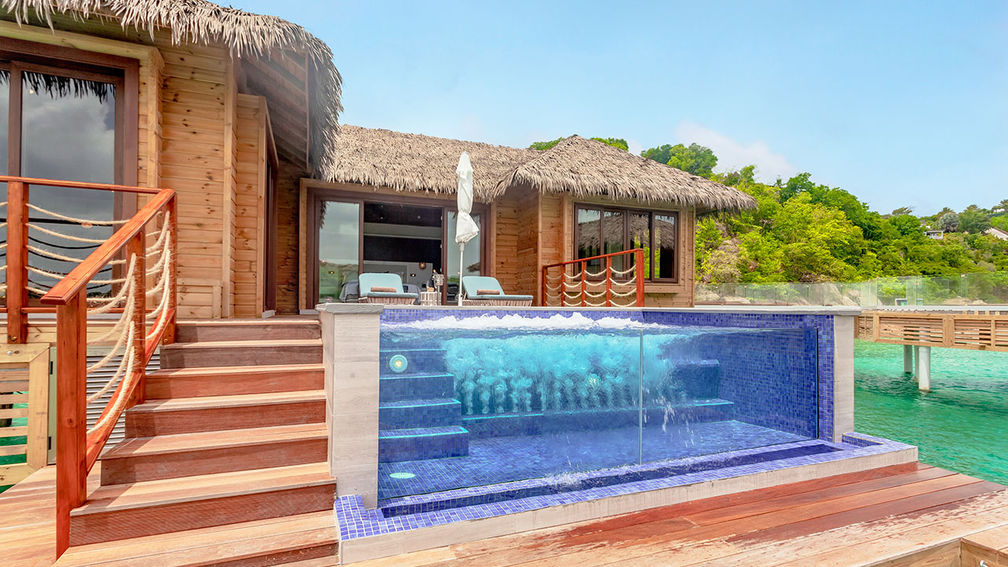
The term “best overwater hotels for corporate hosting” is frequently misapplied, often conflated with “luxury vacation resorts.” In a corporate context, “best” is a functional metric, not an aesthetic one. A property that is ideal for a honeymoon is often poorly suited for a professional offsite.
The primary misunderstanding lies in the assumption that any resort capable of hosting a guest can host a team. Corporate hosting requires a sophisticated infrastructure that many isolated, leisure-focused properties lack. This includes high-bandwidth, redundant internet connections; dedicated, climate-controlled meeting spaces that are not adjacent to noisy pool decks or leisure zones; and the ability to accommodate the specialized logistics of group travel, such as concurrent arrivals and departures. When evaluating these properties, one must look past the “glass floor panels” and “private plunge pools” to verify the technical and operational capabilities of the property’s back-end management.
Deep Contextual Background
Historically, the overwater bungalow was a product of the mid-20th-century boutique travel movement, designed exclusively for transient leisure. However, the paradigm shift toward distributed, remote, and hybrid workforces has fundamentally changed this.
Today’s leadership teams seek “deep work” environments—spaces where the lack of external distraction is a feature, not a bug. Over the last decade, resorts in regions like the Maldives, Bora Bora, and the Caribbean have pivoted to capture this high-margin segment, investing in “event-ready” infrastructure. They are no longer just hospitality providers; they are increasingly functioning as temporary headquarters for international firms, managing everything from secure data relay to complex, multi-day, agenda-driven programming.
Conceptual Frameworks for Venue Selection
To evaluate candidates effectively, apply these three mental models:
-
The Infrastructure Reliability Index: How does the resort handle the “last mile” of technology? Does it rely on a single satellite feed, or does it have backup microwave links?
-
The Spatial Separation Principle: Are the meeting spaces physically distanced from the leisure spaces? A retreat that mixes your team with families or honeymooners is rarely productive. Look for resorts that offer “property buyout” options, which effectively convert the entire resort into a private, secure, and focused workspace.
-
The Logistical Friction Score: Calculate the number of “points of failure” in the transit path. A venue that requires two flights and a boat transfer has a much higher friction score than one with a direct seaplane or bridge connection.
Categories of Corporate-Ready Overwater Retreats
-
The Buyout-Driven Private Island: These offer absolute exclusivity. The entire property is yours, ensuring total privacy for sensitive strategy sessions.
-
The Executive “Wing” Resort: These resorts have dedicated corporate wings with semi-private amenities, providing a balance between seclusion and shared facilities.
-
The Eco-Adaptive Hub: Focused on sustainability, these locations are ideal for mission-aligned companies. They often have smaller footprints but excellent, high-tech meeting facilities.
-
The Hub-and-Spoke Coastal Cluster: Resorts that provide overwater infrastructure while remaining close to a main island hub, offering the best access to high-end medical and logistical services.
| Feature Type | High Corporate Utility | Low Corporate Utility |
| Connectivity | Redundant Fiber/Satellite | Consumer-grade Wi-Fi |
| Meeting Space | Dedicated, soundproofed | Multi-purpose dining/lounge area |
| Exclusivity | Property-wide buyout option | Open-access guest areas |
| Logistics | Direct transfer/private pier | Public ferry/weather-dependent |
Detailed Real-World Scenarios
-
Scenario 1: High-Stakes Leadership Offsite. The objective is absolute confidentiality. Decision: Choose a small-island buyout.
-
Scenario 2: Cross-Functional Team Bonding. The objective is connection. Decision: A mid-sized resort with robust, shared team-building activities (e.g., guided diving, structured group cooking classes). Second-Order Effect: Without structured networking, siloed departments may fail to integrate.
-
Scenario 3: Product Launch or Board Meeting. The objective is high-impact presentation. Decision: A large, professional-tier resort with dedicated audiovisual support and business-grade technical staff on-site.
Planning, Cost, and Resource Dynamics
The “best overwater hotels for corporate hosting” involve significant cost variance. Planners should account for the “Logistics Tax”—the inherent cost of transporting goods, food, and specialized AV equipment to an island environment.
| Budget Component | Relative Weight | Variability |
| Accommodation | 40% | High (Seasonality) |
| Transfer/Logistics | 20% | High (Weather/Fuel) |
| AV/Tech Production | 15% | Medium (Specific Needs) |
| Contingency Fund | 25% | Essential (15%+ buffer) |
Risk Landscape and Failure Modes
The failure modes in these environments are almost always compounded by their isolation. A simple scheduling error can become an expensive catastrophe if the boat transfer team is not aligned with the arrival manifest.
-
The “Connectivity Gap”: Assuming standard Wi-Fi is sufficient for video-heavy presentations.
-
The “Cultural Collision”: Failing to account for local holidays or customs that may limit staffing or service availability.
-
The “Exhaustion Trap”: Over-programming a schedule in a high-temperature/high-humidity environment, leading to heat-related fatigue.
Governance, Measurement, and Long-Term Adaptation
To ensure your retreat investments yield results, apply a governance structure:
-
Leading Indicators: Attendance confirmation, dietary/preference collection completion, and pre-retreat meeting participation.
-
Lagging Indicators: Post-retreat engagement surveys, strategic initiative progress 90 days out, and team turnover metrics.
-
Review Cycles: Conduct a “hot wash” (immediate debrief) within 48 hours of return, and a formal review 30 days later to assess if the retreat objectives were actually met.
Common Misconceptions
-
“Everything is included.” Luxury does not mean unlimited. Always verify which services (laundry, premium AV, specialized local transport) are truly covered in the corporate package.
-
“The weather is perfect.” Every coastal location has a wet season.
-
“Team-building is inherent.” Simply putting people in a beautiful place does not guarantee bonding.
Conclusion
The selection of the best overwater hotels for corporate hosting is an exercise in discerning the intersection of architectural beauty and operational rigor. It is not merely about finding a beautiful venue; it is about securing a platform that can support the high-density requirements of corporate work while providing the atmospheric detachment necessary for innovation and alignment. By approaching this choice with the analytical focus usually reserved for capital investments, companies can turn a logistical challenge into a high-leverage strategic asset.