The American approach to the tropical aesthetic is a curious intersection of climate science, real estate development, and the human inclination to seek equilibrium in temperate environments. While the United States occupies a vast latitudinal range, the specific segments that qualify as “tropical” are geologically limited. This limitation creates a high-pressure real estate market where lifestyle branding often obscures the underlying environmental and systemic complexities. For those seeking long-term residential or investment stability, the distinction between a vacation-oriented resort area and a sustainable tropical living environment is critical.
True tropicality—defined by consistent humidity, minimal seasonal temperature variance, and proximity to marine ecosystems—exists in only a few domestic pockets. These environments require a unique infrastructure to thrive. They demand specialized construction techniques to survive high-moisture air, specific water management systems to mitigate salt-water intrusion, and a socioeconomic structure capable of supporting a transient population. When we analyze these locales, we find that the most successful destinations are those that have balanced the influx of tourism with the structural integrity of the local community.
Analyzing these regions requires a departure from the glossy, curated imagery of travel media. It demands an investigation into how these communities manage their resource footprints, how they adapt to the intensifying patterns of maritime weather, and how they define “lifestyle” beyond the presence of palm trees and coastal access. This article provides a rigorous, analytical examination of the domestic tropical landscape, aimed at those who demand an evidence-based perspective on where and how to integrate such a lifestyle into their long-term planning.
Understanding “tropical lifestyle destinations usa”
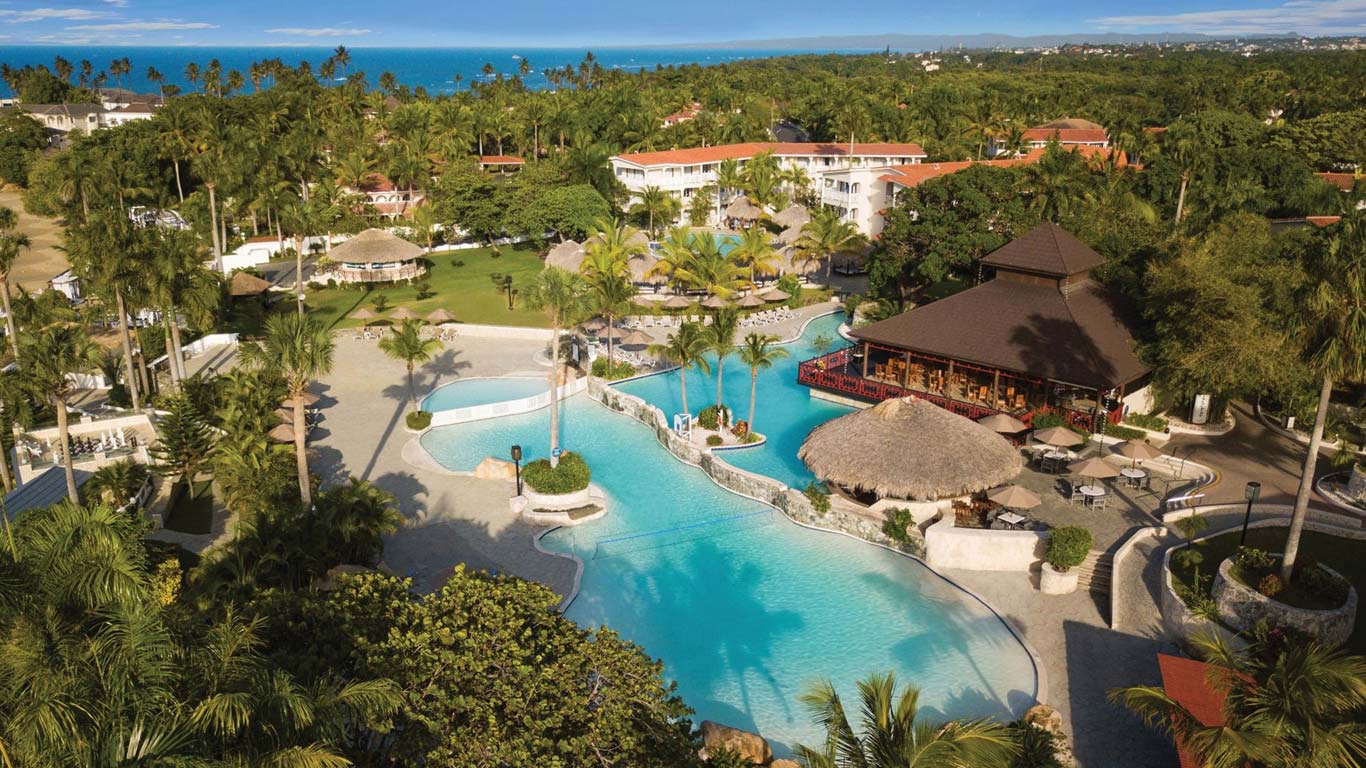
When investors and residents evaluate tropical lifestyle destinations usa, they often prioritize proximity to the water while neglecting the systemic fragility of the environment. The American tropical paradigm is not a static concept; it is a volatile, high-maintenance proposition. The primary misunderstanding is the assumption that these regions function like temperate suburbs with better weather. In reality, these environments exert a constant, corrosive pressure on every aspect of infrastructure.
The risks inherent in these destinations are multifaceted. Oversimplification—such as focusing exclusively on market appreciation—ignores the rising costs of coastal insurance, the degradation of local freshwater supplies, and the increasing frequency of extreme weather events. Successful long-term placement in these regions requires a sophisticated assessment of the site’s geomorphology. One must ask not only if the area is “tropical” in climate, but if it is resilient to the environmental stressors that are intensified by the climate of the current century.
A common oversight involves the disconnect between infrastructure and environment. A destination might offer an exceptional aesthetic, yet suffer from a dilapidated power grid or a sewage system ill-equipped to handle high-density habitation. Understanding the landscape requires mapping the destination’s “carrying capacity”—the limit to which the infrastructure can sustain growth before the quality of life begins to decline. Those who ignore this limit often find themselves in a community where the lifestyle they sought has been systematically degraded by over-development and resource scarcity.
Historical and Systemic Evolution
The development of the American tropics followed a trajectory from specialized agricultural hubs to tourism-dominant economies. Historically, regions like South Florida and parts of Hawaii functioned as raw material providers—sugarcane, pineapple, and citrus. The post-war transition to a “leisure-class” focus shifted the economic engine toward hospitality and luxury real estate. This transition created a feedback loop where development occurred in areas that were environmentally unsuitable for high-density habitation, leading to the current challenge of retrofitting infrastructure for climate resilience.
Conceptual Frameworks and Mental Models
-
The Carrying Capacity Ceiling: Every tropical enclave has an ecological limit. Once surpassed, the value of the “lifestyle” experience drops as environmental quality degrades.
-
The Logistical Distance Decay: The cost of maintaining high-quality life in the tropics increases in direct proportion to the distance from mainland logistics hubs.
-
The Corrosion-Lifecycle Model: This framework treats physical assets as depreciating entities that are constantly attacked by moisture and salinity, requiring a high, fixed-cost “maintenance tax” for existence.
Key Categories and Economic Variations
| Category | Typical Landscape | Infrastructure Risk | Economic Driver |
| Resort-Centric | Managed/Artificial | High (Service-reliant) | Tourism/Seasonality |
| Urban-Coastal | Densely Developed | High (Storm surge) | Diversified Economy |
| Remote/Isolated | Low-Density | Extreme (Logistics) | Self-Sufficiency |
| Agro-Tropical | Inland/Highland | Low (Physical decay) | Agricultural/Land Use |
Real-world success requires matching one’s personal temperament and financial tolerance to the specific risk profile of these categories. An “Urban-Coastal” enclave offers higher stability but higher exposure to urban decay and storm surge, whereas “Resort-Centric” regions offer higher ease but are subject to extreme boom-bust cycles.
Detailed Real-World Scenarios
-
The Infrastructure Lag: A regional development attracts a high-net-worth population without upgrading the waste-water treatment facility. The result is a degraded local marine environment that ruins the property value of the beachfront homes.
-
The Storm-Resilience Pivot: A community recognizes the changing climate reality and implements a multi-billion dollar sea-wall and flood-mitigation project. Property taxes increase, but the longevity of the assets is secured.
-
The Logistical Isolation Failure: A remote lifestyle destination loses its primary ferry link for three weeks due to weather. The residents learn that their definition of “lifestyle” was entirely dependent on external supply lines they had ignored.
Planning, Cost, and Resource Dynamics
The economic management of a tropical lifestyle involves non-intuitive costs.
| Component | Cost Impact | Variability Strategy |
| Insurance Premiums | High/Rising | Geographic Dispersion |
| Maintenance/Corrosion | Constant | High-Spec Materials |
| Logistics/Imported Goods | Moderate | Inventory Stockpiling |
The opportunity cost of living in these areas is often the sacrifice of the diverse social and economic utility found in major temperate hubs.
Tools, Strategies, and Support Systems
-
Long-Term Weather Pattern Mapping: Utilizing granular regional climate data rather than general averages.
-
Decentralized Power/Water Systems: Investing in localized solar/battery and desalination to mitigate utility grid instability.
-
Independent Structural Audits: Employing third-party experts to assess the long-term integrity of potential investments against corrosion.
Risk Landscape and Failure Modes
The failure taxonomy in these regions ranges from catastrophic (storm surges) to incremental (salt-spray degradation of electrical systems). The primary risk is the “compounding failure”—where multiple small infrastructure issues (power, water, road access) align to make the destination uninhabitable.
Governance, Maintenance, and Long-Term Adaptation
Governance of these regions must shift toward “predictive maintenance.” Local boards and planning commissions need to implement trigger-based systems: if a certain water quality metric is hit, development must halt. If sea-level markers reach a specific height, local investment must pivot to elevation projects. A layered checklist for the resident includes: (1) structural moisture audit, (2) utility grid independence test, and (3) logistical supply-chain resilience plan.
Measurement, Tracking, and Evaluation
-
Leading Indicators: Municipal investment in non-tourist infrastructure, such as storm drains and grid hardening.
-
Lagging Indicators: Migration patterns (are residents leaving or staying long-term?), school enrollment numbers, and local business retention.
-
Documentation Example: An “Asset Longevity Profile” that tracks the projected vs. actual lifespan of residential structural components.
Common Misconceptions and Oversimplifications
-
Myth: It is always “paradise.” Correction: It is a high-humidity, high-corrosion environment that requires constant, intense maintenance.
-
Myth: Market appreciation is infinite. Correction: Environmental risk will eventually create a “climate ceiling” on property values.
-
Myth: The government will protect the property. Correction: Coastal management budgets are under extreme pressure; personal resilience is more effective than public reliance.
Ethical and Contextual Considerations
The ethics of occupying these regions involves the “resource drain.” Every resident in a remote tropical enclave consumes a disproportionate amount of water and energy compared to a resident in a temperate city. True commitment to the tropical lifestyle includes a responsibility to mitigate this impact through superior design, circular waste management, and support for the local, non-tourist economy.
Conclusion
The pursuit of the ideal environment is a fundamental human drive, but the tropical life within the United States is a project that demands a shift from the romantic to the analytical. It is not merely a geographic choice; it is an engineering and logistical commitment. Those who succeed in maintaining their connection to these destinations do so by treating the environment as a partner that must be respected, rather than a commodity to be consumed. By prioritizing resilience, local integration, and the cold reality of infrastructure, one can find a genuine, sustainable existence within these fragile, beautiful enclaves.