The concept of an overwater hotel—a structure suspended above the marine interface—is an architectural anomaly in the United States. While the global hospitality market integrates the overwater bungalow as a staple of ultra-luxury travel, the domestic U.S. landscape largely lacks this typology. This scarcity is not merely a failure of imagination. Rather, severe environmental, regulatory, and geological constraints make the construction of such assets prohibitively complex within the U.S. borders.
To discuss the best overwater hotels in the us requires a precise understanding of the term. If one adheres to the strict definition—a structure permanently anchored over a deep-water lagoon, accessible only by a private pier—the list of domestic offerings effectively shrinks to zero. Most properties marketed as “overwater” within the U.S. are shore-attached structures. These properties mimic the aesthetic while relying on engineering principles that differ significantly from their international counterparts.
This guide seeks to deconstruct the reality behind these offerings. We provide an analytical framework for those who wish to understand why this form of luxury remains elusive domestically. We will examine the few existing properties that approximate this experience. Furthermore, we will explore the regulatory hurdles that prevent the proliferation of such resorts. By grounding our inquiry in engineering and policy, we provide an objective reference for the domestic market.
Understanding “best overwater hotels in the us”
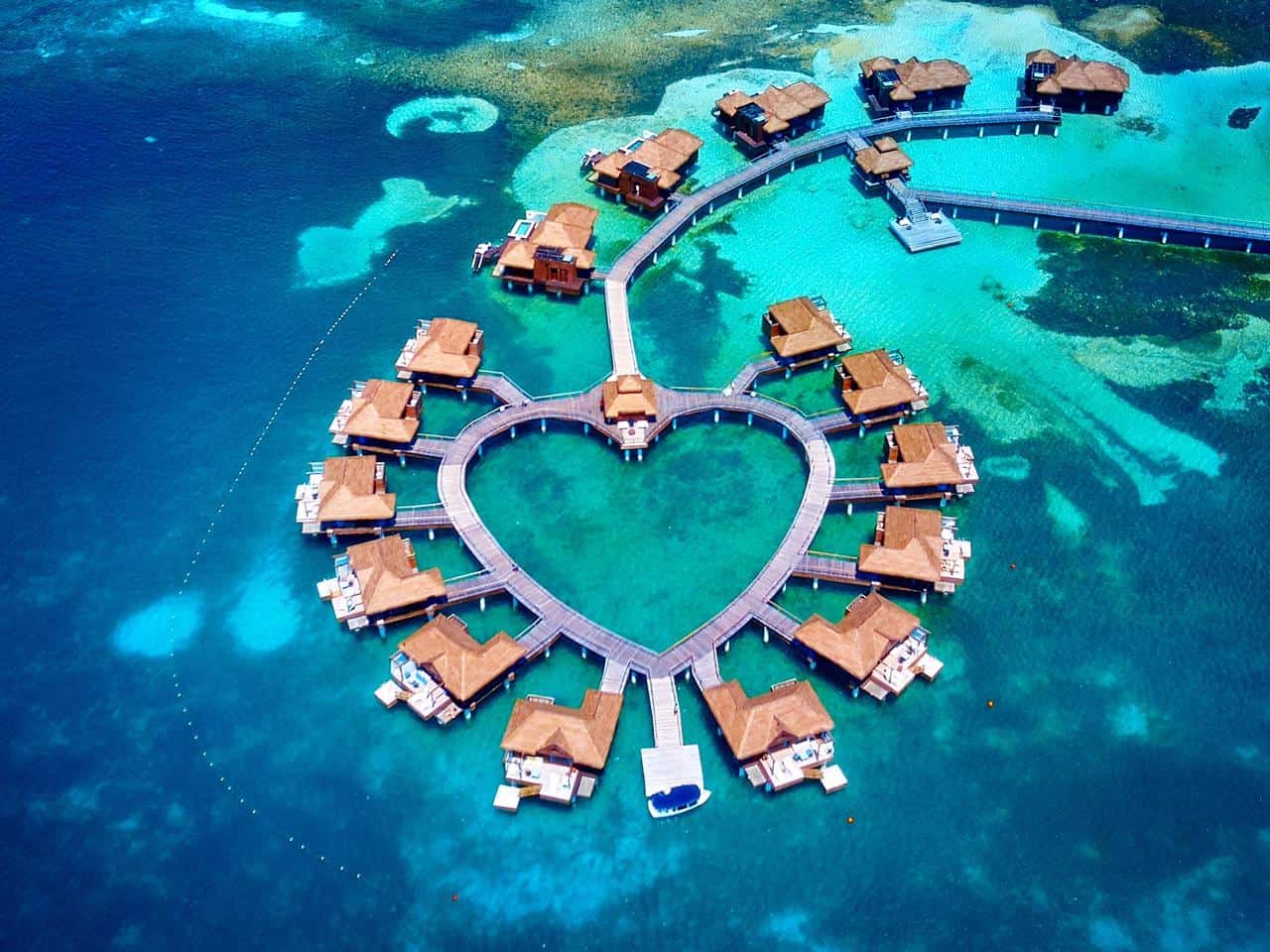
The term best overwater hotels in the us is a linguistic shorthand that often leads to confusion. For the prospective traveler, it implies a domestic version of the iconic Maldivian bungalow—a private, floating sanctuary. For the developer, however, the term represents a massive project management challenge. The U.S. coastline lacks the protected, shallow-water atoll formations found in the tropics. Furthermore, strict environmental protections limit the scope for such development.
A common misunderstanding suggests that developers simply avoid these projects due to a lack of interest. In reality, legal hurdles exist specifically to prohibit the type of development that the overwater bungalow requires. To build such a structure, a developer must disturb the seafloor and its associated ecosystems. Federal agencies heavily protect these environments. Even when development is permissible, the structural engineering required to withstand U.S. hurricane zones drives capital expenditure upward. Consequently, many proposed projects become financially unviable.
When one begins to look for the best overwater hotels in the us, they inevitably find that most results refer to shore-connected bungalows. Oversimplification—treating all waterfront hotels as equivalent to overwater bungalows—is a profound error. It ignores the unique engineering and logistical tethering that defines the authentic overwater experience.
Historical and Systemic Evolution
The evolution of domestic waterfront architecture has favored land-side development over aquatic extension. Throughout the 20th century, U.S. coastal tourism surged. During this time, developers prioritized accessibility, land-based infrastructure, and coastal defense. Unlike the isolated hospitality models that allowed overwater bungalows to flourish in the Maldives, the U.S. model emphasized high-density, beach-oriented tourism. This systemic focus on the beachfront has left little room for the adoption of the overwater bungalow typology.
The few instances where developers attempted these structures in the U.S. faced extreme regulatory scrutiny. These projects serve as exceptions that prove the rule. The U.S. regulatory framework prioritizes the protection of the coastal interface over architectural indulgence.
Conceptual Frameworks for Aquatic Development
To analyze why the best overwater hotels in the us remain limited, one must apply the following conceptual frameworks:
-
The Regulatory Friction Model: This framework posits that the number of successful aquatic developments in a region is inversely proportional to the strictness of local environmental protection statutes. The U.S. represents the highest level of regulatory friction due to its multi-layered state and federal permitting processes.
-
The Logistical Tether Principle: In the U.S., the costs of labor, materials, and specialized marine maintenance are extreme. A project that lacks a connection to a high-efficiency mainland support hub will inevitably face an operational crisis.
-
The Environmental Carrying Capacity Model: Overwater bungalows require a specific, low-energy marine environment. Most U.S. coastlines are “high-energy.” They endure constant wave action that would destroy a standard stilt-supported bungalow in a single season.
The Regulatory and Ecological Landscape
The regulatory barrier remains the most significant factor. The U.S. coastline operates through a complex web of agencies, including the Army Corps of Engineers. Building a structure over the water requires a permit. This permit mandates a comprehensive study of the project’s impact on fish habitats, water flow, and sediment transport.
Ecologically, the U.S. lacks the protected, shallow-water atoll structures that serve as the foundation for the international bungalow market. In the Maldives, an outer reef naturally protects the lagoon. In the U.S., even in the Florida Keys, the environment experiences high tidal variability and storm-surge risk. Therefore, any overwater structure requires industrial-strength reinforcement. This requirement is fundamentally incompatible with the “barefoot luxury” aesthetic that guests typically seek.
Analyzing Domestic “Overwater” Properties
When one searches for the best overwater hotels in the us, they find a very short list of properties that attempt to approximate the experience:
-
Disney’s Polynesian Village Resort (Florida): These units represent one of the few instances where a major resort successfully executed a “bungalow” experience over a protected lagoon. However, these are fundamentally part of a timeshare structure. They prioritize a themed experience rather than functioning as an authentic marine-isolated sanctuary.
-
Bungalows Key Largo (Florida): This property is frequently cited as the closest approximation to a true, adults-only overwater experience in the U.S. It operates as an all-inclusive resort. It focuses on the luxury of the waterfront, though it remains structurally tethered to island infrastructure in a way that differs significantly from international, detached-bungalow models.
| Feature | Polynesian Village Resort | Bungalows Key Largo |
| Structural Basis | Shore-attached/Pier | Pier-connected |
| Marine Context | Artificial/Controlled lagoon | Protected Florida Keys lagoon |
| Operational Model | Timeshare/Luxury | All-inclusive |
| Market Position | Family/Themed | Adults-only/Couple-focused |
The logic remains clear: the best overwater hotels in the us are not “overwater” in the sense of being detached, offshore assets. Instead, they are highly engineered, shore-connected properties. They utilize the bungalow aesthetic while operating under the strict engineering and safety protocols required by U.S. law.
Planning, Cost, and Resource Dynamics
The economic reality of these properties is distinct from any other hospitality segment in the U.S. Initial capital outlays for marine-grade construction are exorbitant. Projects often require specialized labor and materials that remain difficult to source.
| Resource Category | Cost Volatility | Long-Term Risk Profile |
| Marine-Grade Materials | High | Extreme (Corrosion) |
| Utility Infrastructure | High | Systemic leak/Contamination |
| Environmental Compliance | Moderate | High (Regulatory changes) |
Opportunity costs are also significant. A developer who invests in a U.S.-based overwater project faces compounding maintenance costs and regulatory oversight. These factors can easily cannibalize the annual net operating income of the resort.
Risk Landscape and Failure Modes
Risk in the domestic context is heavily weighted toward regulatory and environmental factors. The primary failure modes include:
-
Permitting Denial: Local, state, or federal authorities frequently reject new, large-scale overwater projects.
-
Storm-Surge Vulnerability: The engineering required to withstand U.S. hurricane codes mandates that these structures be built on concrete foundations. Consequently, they look more like high-rises than bungalows.
-
Operational Frictions: Maintaining a workforce that must operate on a pier-tethered structure leads to high labor overheads.
Governance, Maintenance, and Long-Term Adaptation
A successful U.S.-based aquatic property requires an obsessive approach to governance. This includes:
-
Layered Inspection Cycles: Managers should mandate recurring audits of the piers, sub-sea utility conduits, and water flow beneath the structure.
-
Environmental Adaptation: Developers must design structures that allow for elevation or adjustment as sea levels and storm intensities change over the coming decades.
Measurement, Tracking, and Evaluation
Managers must prioritize objective data over guest feedback.
-
Leading Indicators: Structural vibration sensors, corrosion-monitoring probes, and local water quality metrics serve as early indicators.
-
Lagging Indicators: Repair cost-to-revenue ratios, staff efficiency metrics in service delivery, and the longevity of materials between replacement cycles provide retrospective data.
Documentation examples include a “Structural Integrity Log” and an “Environmental Health Impact Report.” These allow managers to evaluate the long-term feasibility of the property.
Common Misconceptions and Oversimplifications
-
Myth: Any hotel on the water is an “overwater bungalow.” Correction: True bungalows are detached, stilt-supported structures over water. Most domestic options are shore-connected rooms.
-
Myth: These structures are “green.” Correction: These projects require significant disturbance to the aquatic environment. They also require massive energy consumption to maintain a luxury environment over the water.
-
Myth: They are affordable. Correction: Due to the high cost of construction and maintenance, these are among the most expensive lodging options in the U.S.
Conclusion
The pursuit of the best overwater hotels in the us is, ultimately, a search for a category that is fundamentally at odds with the country’s regulatory and environmental reality. These properties are exceptions. They exist within a narrow set of engineering solutions that satisfy both the desire for luxury and the rigid requirements of domestic law. By understanding that these resorts are masterpieces of engineering rather than mere accommodations, one gains a far more accurate perspective on the limits of the domestic aquatic hospitality market. Ultimately, the authority to build and operate such assets rests with those who are as adept at navigating environmental law as they are at managing high-end guest experiences.