The overwater bungalow is often perceived as an immutable symbol of unreachable luxury, a structural indulgence limited to the highest echelons of global tourism. This perception, while grounded in the reality of high capital expenditures and steep operational costs, fails to account for the increasing diversification of the market. As the typology of these resorts expands, so too does the opportunity for the discerning traveler to experience these environments without necessarily overextending their financial resources. Achieving this balance, however, requires a departure from traditional, impulse-driven travel planning.
Mastering this domain necessitates a shift from viewing the cost of a stay as a static price point to analyzing it as a series of variables: seasonal demand cycles, property-specific operational overheads, and the hidden logistics of remote island access. The luxury of an overwater bungalow is not a monolithic product, but a composite of engineering, location, and service. By deconstructing this composite, one can identify specific segments of the market where the value-to-cost ratio remains favorable, effectively demystifying the process of planning an accessible aquatic getaway.
Successful navigation of this sector demands patience and a systematic approach to research. One must look beyond the curated marketing imagery to the fundamental operational constraints that dictate the pricing of a resort. When one understands the “why” behind the pricing—the cost of desalination, the complexity of supply chains, and the impact of weather-driven maintenance—it becomes significantly easier to find strategic entry points that align with a controlled budget. This guide serves as a rigorous, analytical framework for those who seek to bridge the gap between financial prudence and an elevated travel experience.
Understanding “how to plan overwater hotels stays on a budget”
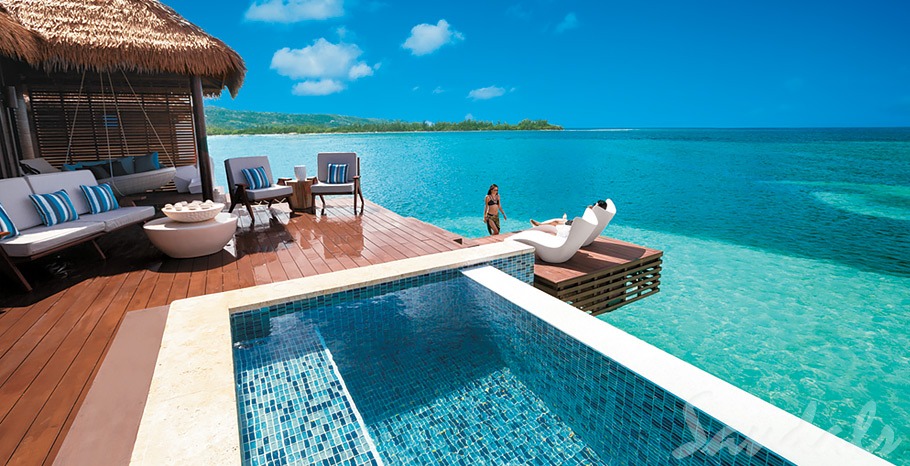
The process of learning how to plan overwater hotels stays on a budget is frequently undermined by the assumption that cost-saving is merely about selecting a “cheaper” hotel. In reality, this is an exercise in resource optimization. Oversimplification, such as focusing solely on the nightly room rate, ignores the compounding impact of indirect costs like seaplane transfers, mandatory meal packages, and the high price of imported consumables in remote locations.
A common misunderstanding is that all “overwater” experiences provide the same degree of privacy and exclusivity. This is incorrect. Properties that feature dense arrays of overwater bungalows often price their units based on proximity to common amenities, creating a tiered pricing structure where the “budget” units are located in higher-density, lower-privacy zones. Those who understand how to plan overwater hotels stays on a budget recognize that by sacrificing a degree of seclusion, one can gain access to the same fundamental marine environment and resort facilities at a fraction of the price of the “overwater suite” category.
The danger in this pursuit lies in the potential for hidden expenses to derail the entire financial plan. Therefore, a comprehensive plan must start with an all-in cost calculation. This requires a granular breakdown of every anticipated expense, from the point of origin to the final departure, ensuring that the budget reflects reality rather than wishful thinking.
Historical and Systemic Evolution
Historically, the overwater bungalow was a premium, scarce asset, strictly reserved for the highest-end segment. Over the past three decades, however, the industry has seen a massive expansion in supply, driven by the modularization of construction techniques and the expansion of these resorts into emerging tourist destinations. This supply-side growth has created a more tiered market, where entry-level properties compete on value, while established luxury brands remain focused on extreme exclusivity. This market polarization is the primary mechanism that allows for more flexible pricing.
Conceptual Frameworks and Mental Models
To manage a controlled budget, one should apply the following frameworks:
-
The Logistical Distance Decay Principle: The cost of goods and services at a resort is directly correlated to the difficulty of transporting them from a mainland hub. Budget-conscious planning favors properties with shorter, more efficient logistical links.
-
The Seasonal Intensity Model: Demand follows a predictable curve. The delta between peak-season and shoulder-season pricing is massive, often reaching a 50–70% variance. Strategic timing is the single most effective tool for cost reduction.
-
The Hybrid-Value Model: This framework focuses on resorts that offer high-quality facilities with a mix of land-based and overwater units. The “budget” traveler gains access to the same resort amenities by choosing land-based accommodation while enjoying the aquatic environment, rather than paying the premium for a bedroom over the lagoon.
Key Categories and Economic Variations
| Category | Typical Infrastructure | Price Drivers | Budget Strategy |
| High-Density Array | Shallow Lagoon | Quantity/Convenience | Lower privacy, higher value |
| Hybrid-Resort | Beach/Lagoon Combo | Utility Centralization | Use land-based rooms |
| Emerging Destinations | New Infrastructure | Low Market Saturation | High value for lower cost |
| Off-Season Tier | Full Service | Seasonal Demand | Significant rate reduction |
Realistic decision logic dictates that when one considers how to plan overwater hotels stays on a budget, the most successful path is identifying properties that have achieved economies of scale in their utility and service operations.
Detailed Real-World Scenarios
-
The Shoulder-Season Pivot: A family plans their trip for the first week of a transition month, missing the peak surcharge by days while benefiting from reduced resort demand. They also negotiate a meal plan at the point of booking, avoiding the significantly higher à la carte pricing on-site.
-
The Hybrid-Room Strategy: A couple prioritizes the resort experience over the room location. They book a land-based villa for four nights and upgrade to an overwater unit for the final two, achieving the desired experience while maintaining the total budget constraint.
-
The Logistical Bypass: By choosing a property accessible by ferry rather than seaplane, the travelers eliminate a major, unavoidable cost that is often missing from the initial “room-only” quote.
Planning, Cost, and Resource Dynamics
The economic management of these stays requires a clear separation of fixed and variable costs.
| Cost Factor | Direct Cost Impact | Variability Strategy |
| Accommodation | High | Use seasonal pivots |
| Transfers | Moderate/High | Choose ferry over air |
| Dining | Moderate | Pre-pay/All-inclusive bundles |
| Activities | Low/Moderate | Prioritize self-guided exploration |
Understanding how to plan overwater hotels stays on a budget involves recognizing that room rates are often the most negotiable element of the stay, whereas logistical costs are often fixed and unavoidable.
Tools, Strategies, and Support Systems
-
Geographic Demand Analysis: Researching which regions have a shorter “peak” season to maximize the window for moderate pricing.
-
Meal-Plan Benchmarking: Comparing the cost of pre-purchased all-inclusive packages against estimated a la carte spending.
-
Third-Party Transfer Aggregators: Using independent transport services where legally permissible to avoid resort-specific price gouging on airport transfers.
-
Loyalty Program Leveraging: Utilizing points for the room rate, which leaves the budget free for the unavoidable logistics and meal costs.
Risk Landscape and Failure Modes
The primary risk in budget planning is the “hidden cost creep.” Compounding this is the risk of selecting a property with poor logistical connectivity, where a delay in transport can lead to expensive, missed connections or unnecessary overnight stays at transit points.
Governance, Maintenance, and Long-Term Adaptation
For the traveler, “governance” of a budget means maintaining a rigid ledger. Before departure, create a comprehensive spreadsheet that includes every mandatory cost, including the “hidden” resort taxes. If the total exceeds 90% of the budget, the plan is inherently flawed and requires adjustment. This is not about being restrictive; it is about ensuring that the experience does not collapse due to a lack of liquidity midway through the trip.
Measurement, Tracking, and Evaluation
-
Leading Indicators: The cost-per-day trend as confirmed bookings are added to the itinerary.
-
Lagging Indicators: Total actualized cost vs. the initial planned budget, adjusted for emergency logistical expenditures.
-
Documentation: Keep a “Logistics Map” documenting every transfer point, the confirmed price, and an emergency contingency budget for every leg of the journey.
Common Misconceptions and Oversimplifications
-
Myth: Everything is included. Reality: Mandatory taxes and service fees can inflate a bill by 25% or more; always verify the “net” total.
-
Myth: Direct booking is always cheapest. Reality: Travel agencies with exclusive resort relationships can often provide value-adds (free meals, transfers) that are invisible to the individual.
-
Myth: Budgeting means sacrificing quality. Reality: Budgeting means prioritizing where to spend—e.g., opting for a less expensive room location to ensure the budget covers the full island experience.
Ethical and Contextual Considerations
The ethical traveler understands that “budget” should not imply an exploitation of the resort’s resources. True value is found in properties that manage their own resources efficiently, as these properties are inherently more sustainable and often better positioned to offer lower prices without compromising the quality of the marine environment.
Conclusion
Learning how to plan overwater hotels stays on a budget is not a search for “cheap” accommodations; it is a search for logistical and financial intelligence. It requires the traveler to understand the mechanics of the property, the timing of the market, and the total cost of their presence in a remote, aquatic environment. By approaching these trips with the mind of an analyst rather than a tourist, one can secure an experience that is as financially sustainable as it is memorable. The goal is to strip away the unnecessary, focus on the fundamental quality of the environment, and navigate the logistical realities of the sea with foresight and strategy.