The overwater bungalow occupies a unique position in modern architecture, serving as both a sanctuary and an exposed outpost in a high-energy maritime environment. These structures, while synonymous with luxury, are fundamentally experiments in living at the boundary of two volatile elements. Unlike conventional inland properties, they exist in a state of perpetual struggle against corrosion, tidal surges, and biological encroachment. The engineering required to maintain this illusion of serenity is immense, and for those who overlook the structural complexities, the consequences can be profound.
Success in this niche is not merely a matter of aesthetic curation; it is a discipline of rigorous risk management. Every aspect of an overwater property—from the depth of its pilings to the layout of its sub-sea utility conduits—must be calculated against the long-term realities of its setting. When individuals or organizations approach these assets with the assumption that they are as resilient as land-bound architecture, they invariably invite failure. The infrastructure of an overwater resort is a fragile, interconnected system where a localized issue in one bungalow can, if improperly managed, cascade into a comprehensive asset failure.
This article serves as a definitive examination of the hazards inherent in this development model. It provides the analytical framework necessary to identify, assess, and mitigate the dangers that threaten the long-term viability of aquatic hospitality assets. By moving beyond surface-level observations and focusing on the underlying engineering and operational realities, we establish a robust methodology for ensuring these unique destinations remain stable, sustainable, and secure for years to come.
Understanding “how to avoid overwater hotels risks”
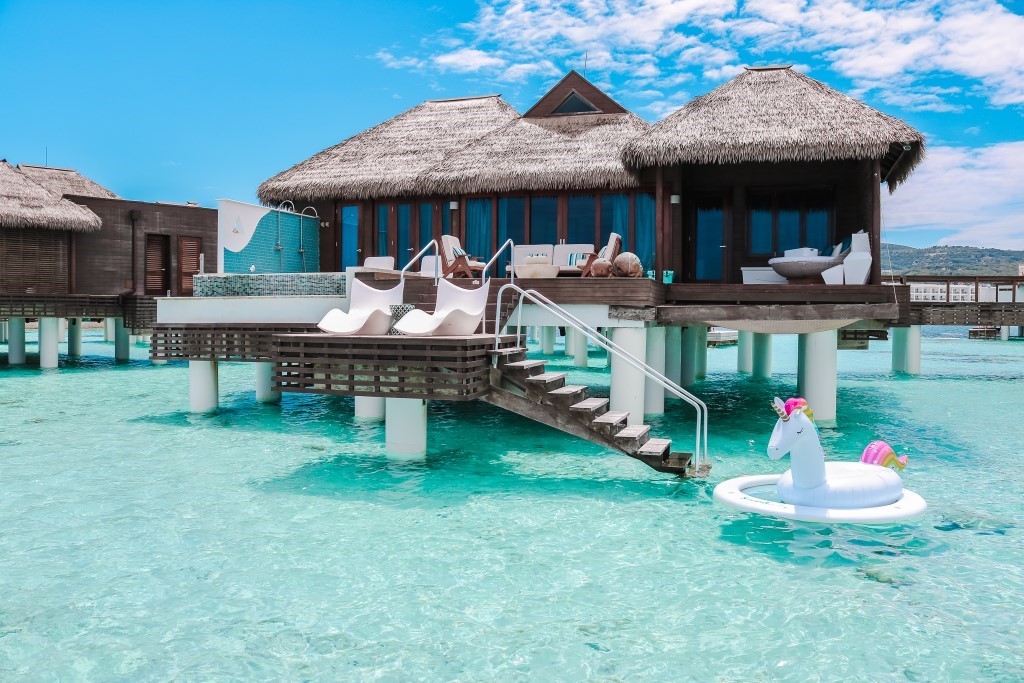
The challenge of how to avoid overwater hotels risks is multifaceted, requiring a deep, analytical dive into both the physical and operational vulnerabilities of the property. Many stakeholders mistakenly view these risks as limited to “weather events,” failing to account for the systemic, invisible decay caused by salt-spray, microbial corrosion, and hydrodynamic pressure. When we speak of risk in this context, we are discussing the cumulative possibility of failure across three primary vectors: structural fatigue, ecological degradation, and logistical service bottlenecks.
A common misunderstanding is that overwater units are modular, universal designs that can be replicated across diverse marine environments. This is a hazardous assumption. A design that proves resilient in a calm, shallow-water lagoon is fundamentally unsuited for a location subject to high-velocity current or significant tidal variance. Learning how to avoid overwater hotels risks begins with the rejection of “off-the-shelf” architectural solutions in favor of site-specific engineering. If the design does not account for the specific bathymetry, water temperature, and geological stability of the reef, the risk of foundation failure or erosion increases exponentially.
Oversimplification acts as the primary catalyst for project failure. Treating the reservation, construction, and maintenance of these units as separate silos prevents management from seeing the larger picture. An effective approach requires integrating these functions into a single risk-aware ecosystem. Management must recognize that a failure in one area—such as a neglected sewage line—is not just a technical issue, but a reputational threat that can destroy the property’s brand equity.
Historical and Systemic Evolution
The history of the overwater bungalow is one of trial and error, moving from primitive, short-lived platforms to the sophisticated, engineered habitats seen in elite resorts today. Early efforts often ignored the long-term impact of salt on materials, resulting in “dead” structures that required constant, inefficient patching. The industry has since moved toward higher-grade materials and more complex, data-reliant construction methodologies.
Systemically, this has forced developers to adopt a more cautious approach to expansion. Where early projects were often extended without consideration for water flow or sediment transport, current professional standards demand that every addition be modeled for its impact on the lagoon. This evolution mirrors the broader professionalization of the maritime engineering sector, where the goal is to predict failure before it occurs, rather than reacting once the environment has begun to reclaim the structure.
Conceptual Frameworks for Risk Mitigation
To effectively manage risk, one should apply several conceptual lenses:
-
The Marine-Stability Model: This posits that the asset must be designed with a “zero-interference” goal regarding the local current. If the structures obstruct natural water movement, the resulting stagnation creates a high-risk zone for biological decay and infrastructure corrosion.
-
The Logistical Tether Principle: The efficiency of an overwater asset is inversely proportional to its distance from the central hub. Risk is minimized by centralizing utilities and minimizing the reach of exposed, sub-sea conduits that are difficult to access for routine repair.
-
The Material-Cycle Hierarchy: By categorizing every component—from the pilings to the roof fasteners—by its exposure risk, operators can implement predictive replacement schedules that prevent failure cycles from compounding.
Key Categories and Structural Variations
| Category | Typical Foundation | Primary Vulnerability | Mitigation Strategy |
| Fixed Pile | Driven Steel/Timber | Sediment erosion | Deep-well anchoring |
| Floating/Pontoon | Buoyant Chassis | Storm-surge drift | Dual-anchor redundant systems |
| Reclaimed-Base | Land-Fill/Concrete | Hydrostatic uplift | Permeable foundation drainage |
| Cantilever/Coastal | Land-Attached | Shoreline recession | Set-back engineering |
Decision logic dictates that the choice of foundation is the single greatest determinant of long-term risk. Projects that prioritize aesthetic preference over geomorphological suitability are the most likely to experience premature structural degradation.
Detailed Real-World Scenarios
-
The Hydrodynamic Failure: A resort is built in a lagoon where current patterns were only mapped during the calm season. During the monsoon, the increased flow exerts massive lateral force on the pilings, leading to microscopic cracks in the utility conduits. The failure is invisible until the pollution manifests in the lagoon, at which point the reputation of the property is already compromised.
-
The Corrosive Cascade: Salt-spray and high humidity lead to the degradation of a non-standard HVAC bracket. The subsequent leak introduces moisture into the structural cavity, allowing dry-rot to compromise the load-bearing capacity of the joists. The lesson is that no material is too small to be exempt from rigorous inspection.
-
The Logistic Bottleneck: A remote overwater project relies on a single supply boat for all maintenance needs. A mechanical failure in that boat creates a 10-day window where no repairs can be made. If a major utility failure occurs during this window, the resort faces a total loss of operations.
Planning, Cost, and Resource Dynamics
The economic profile of these assets is defined by high upfront costs and a non-linear maintenance curve.
| Factor | Cost Impact | Variability |
| Foundation Engineering | High | Extreme (Depth/Substrate) |
| Corrosion Protection | Moderate | Constant (Salt-load) |
| Logistics/Staffing | Moderate | Very High (Distance/Seasonal) |
| Environmental Monitoring | Moderate | Predictable |
The goal of learning how to avoid overwater hotels risks is to shift expenditure from reactive, “fix-it” costs to proactive, system-wide risk reduction.
Tools, Strategies, and Support Systems
-
Bathymetric and Current Mapping: Non-negotiable for site-specific structural design.
-
Cathodic Protection Systems: Essential for preventing galvanic corrosion in steel-based foundations.
-
IoT-Enabled Leak Detection: Real-time monitoring of all sub-sea conduits prevents environmental disasters before they escalate.
-
Redundant Utility Systems: Ensuring that power, water, and waste-handling are decentralized across different sections of the property.
Risk Landscape and Failure Modes
Risk in the overwater sector is compounding. A small structural fault leads to water ingress; moisture triggers microbial or chemical degradation; degradation compromises foundation integrity. This sequence must be broken by rigorous, granular inspection cycles that do not rely on visual cues alone but on systemic, data-driven integrity reports.
Governance, Maintenance, and Long-Term Adaptation
Governance requires a culture of “preventative vigilance.” This includes:
-
The Layered Checklist: A system that requires structural, utility, and environmental checks on a weekly, monthly, and annual basis.
-
Adjustment Triggers: Pre-defined threshold levels (e.g., vibration in pilings, salt content in utility rooms) that automatically initiate a full audit.
-
Climate-Ready Design: Ensuring that the structures are built to accommodate predicted sea-level rise, allowing for structural jacking or foundation augmentation.
Measurement, Tracking, and Evaluation
-
Leading Indicators: Changes in current speeds, localized corrosion rates on metallic fixtures, and early-warning moisture detection in structural voids.
-
Lagging Indicators: Repair-to-occupancy ratio and the total environmental footprint of the property.
-
Documentation Example: An “Asset Integrity Map” that provides a visual representation of the structural health of every unit, updated after every inspection cycle.
Common Misconceptions and Oversimplifications
-
Myth: Maintenance is an off-season activity. Reality: Corrosion is a 24/7 process that does not wait for the tourism cycle to end.
-
Myth: Wood is always “natural” and thus low-risk. Reality: Untreated or incorrectly treated wood in a tropical, saline environment is a highly volatile, high-maintenance choice.
-
Myth: You can “insure” away the risk. Reality: Insurance can cover the financial loss of a collapse, but it cannot restore the brand equity or the destroyed marine habitat.
Ethical and Practical Considerations
The ethical dimension is not a secondary concern; it is the core of the business. An overwater resort is an ecological parasite if it does not actively contribute to the health of the reef. The most resilient properties are those that implement active coral restoration and advanced waste treatment, as these programs essentially serve as the resort’s environmental “immune system,” reducing the long-term risk of habitat collapse.
Conclusion
Understanding how to avoid overwater hotels risks is fundamentally an exercise in discipline, foresight, and humility before the power of the marine environment. These resorts are beautiful, but they are also precarious. By prioritizing rigorous engineering, proactive maintenance, and systemic risk monitoring, stakeholders can build assets that remain both profitable and persistent, standing as a testament to human ingenuity rather than a warning of its arrogance.