The overwater bungalow represents a unique intersection of high-end hospitality and extreme maritime engineering. Unlike standard land-based real estate, these assets operate in a state of perpetual environmental hostility. The combination of salt-spray, high-velocity currents, and the relentless mechanical stress of tidal shifts ensures that the lifecycle of such a structure is inherently shorter and more expensive than its terrestrial counterparts. For stakeholders—ranging from resort developers to institutional investors—the challenge is not merely to build, but to optimize the long-term financial viability of these properties against the inevitability of structural decay.
Operational inefficiency in this sector is rarely the result of a single oversight. It is usually a systemic accumulation of minor, unresolved issues. A project that ignores the nuance of material science or fails to integrate smart utility management will quickly find its operating margins eroded by repair cycles that outpace revenue growth. Achieving long-term profitability requires a shift in perspective, moving away from short-term aesthetic maintenance toward a strategy of predictive asset management and resource conservation.
This article provides a rigorous framework for those tasked with the oversight of these assets. It moves beyond the common marketing narratives to address the hard, structural, and logistical realities that dictate the cost of ownership. By dissecting the technical and financial variables that influence the viability of overwater projects, we establish a reference for maintaining luxury standards while effectively managing the heavy, unavoidable burdens of aquatic infrastructure.
Understanding “how to reduce overwater hotels costs”
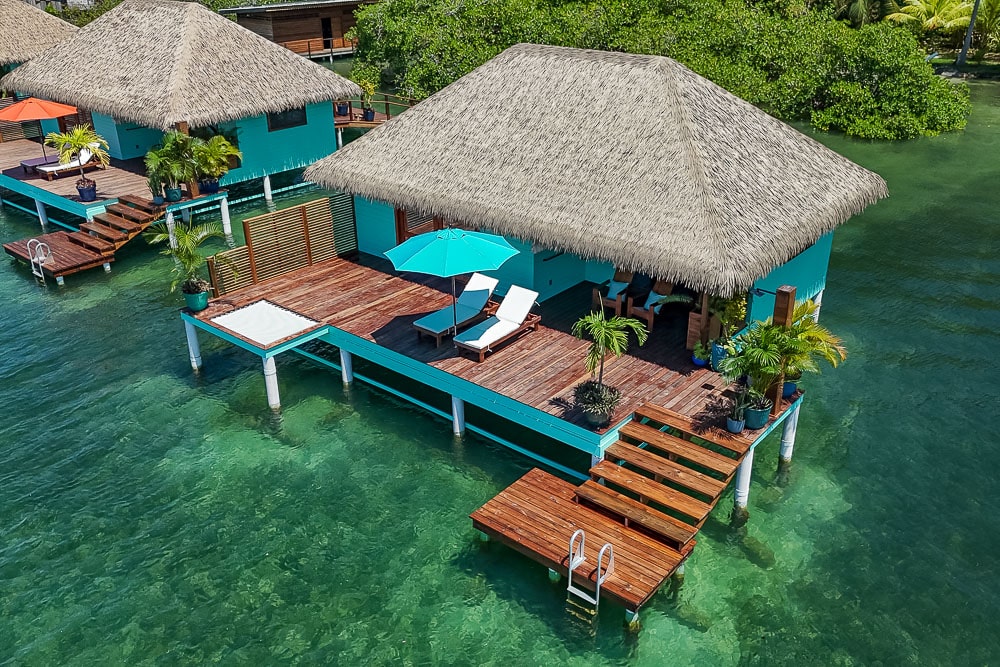
The inquiry into how to reduce overwater hotels costs is fundamentally an exercise in risk mitigation rather than traditional cost-cutting. In this sector, slashing budgets for maintenance or structural integrity often leads to exponential costs down the line. A common misunderstanding involves the conflation of “operational cost” with “capital expenditure.” While the initial build represents a massive investment, the long-term cost is almost entirely dominated by the “friction of isolation”—the sheer difficulty and expense of moving labor, materials, and utilities to a remote aquatic platform.
Oversimplification poses a severe risk. Stakeholders who attempt to save money by using lower-grade, non-marine-rated materials often discover that the rate of corrosion destroys their investment within a decade. Therefore, the strategy of how to reduce overwater hotels costs must focus on efficiency through smart engineering. This involves replacing labor-intensive manual inspections with sensor-based predictive systems, and utilizing modular construction that allows for rapid, low-cost repairs without requiring the demolition of surrounding structures.
True efficiency is achieved by aligning the property’s lifecycle with the natural dynamics of its environment. When a developer asks how to reduce overwater hotels costs, the most professional answer involves optimizing the supply chain and minimizing the “logistical tether” between the utility plant and the guest rooms. If the planning phase fails to address these fundamental logistical dependencies, the resort is doomed to a permanent state of high-cost emergency management.
Historical and Systemic Evolution
Early overwater developments were largely experimental, utilizing whatever local materials were available. This resulted in structures that were visually striking but structurally fragile. The evolution toward the present day has seen a transition to industrial-grade standards, where the focus has moved from “how to build” to “how to keep building.”
Systemically, this has forced a shift in the economic modeling of these resorts. Owners now rely on detailed longitudinal studies to understand when the “cost-of-maintenance” curve will spike. This data-driven approach allows for the implementation of maintenance windows that prevent the accumulation of major structural debt, a stark departure from the reactive, fix-on-fail mentality that characterized the industry in its infancy.
Conceptual Frameworks for Operational Optimization
To effectively manage these environments, one must utilize several frameworks:
-
The Logistical Tether Principle: The financial burden of a bungalow is directly proportional to its distance from the service hub. Optimization requires shortening this tether through localized energy and waste processing, effectively decentralizing the resort infrastructure.
-
The Corrosion-Inertia Model: This suggests that the cost of corrosion is compounded by the time it remains unaddressed. A small rust spot on a steel support is negligible; five years later, it represents a multi-million-dollar foundation replacement. Optimization rests on constant, microscopic intervention.
-
The Lifecycle-Integration Framework: A project is only as efficient as its modularity. If every repair requires a total shutdown of the sector, the opportunity cost is massive. Modular design ensures that repairs happen in real-time, with minimal disruption to the guest experience.
Key Categories and Economic Variations
| Category | Typical Structural Basis | Primary Cost Driver | Economic Strategy |
| Fixed-Pile (Timber) | Natural Organic | High replacement rate | Proactive chemical sealing |
| Steel-Reinforced | Industrial Alloy | Corrosion monitoring | Cathodic protection systems |
| Modular/Floating | Buoyant Chassis | Mechanical complexity | Predictive component cycling |
| Reclaimed-Base | Land-Fill/Concrete | Utility infrastructure | Centralized supply networks |
Determining how to reduce overwater hotels costs requires selecting the category that best matches the specific marine environment. A high-current lagoon requires a different structural logic than a protected bay; ignoring this leads to structural failure and prohibitive cost surges.
Detailed Real-World Scenarios
-
The Foundation Failure Scenario: A resort uses standard, non-marine-grade steel for piles. Within three years, salt-spray exposure initiates severe oxidation. The decision to save money on materials during construction leads to a requirement for a full foundational audit costing 40% of the initial build.
-
The Supply Chain Bottleneck: A resort imports all maintenance labor and parts via long-distance boat transit. By investing in an on-site, specialized technical workshop and training local staff in basic marine repairs, the resort reduces its annual logistics expenditure by 25%.
-
The Utility Leak Case: A centralized, aging pipe system experiences a leak. Because the system lacks sectional valves, the entire resort must be shut down for three days to perform repairs. Integrating a modular valve system during the initial design—or as part of a renovation—prevents this business continuity failure.
Planning, Cost, and Resource Dynamics
The economic profile of these resorts is heavily front-loaded and maintenance-intensive. The following table provides a breakdown of where capital is consumed.
| Factor | Cost Impact | Variability |
| Marine Foundation Engineering | 35% | High (Depth/Soil type) |
| Utility Distribution | 25% | Very High (Distance/Technology) |
| Environmental Monitoring | 10% | Constant (Long-term) |
| Labor/Logistics | 30% | Extremely High |
The objective is to understand how to reduce overwater hotels costs by attacking the variability in the labor and logistics sectors.
Tools, Strategies, and Support Systems
-
Benthic Habitat Mapping: Prevents costly regulatory fines and environmental remediation requirements.
-
Autonomous Monitoring Drones: Drastically reduces the cost of manual, diver-based inspections.
-
Predictive Sensor Arrays: Measures structural stress, salinity, and humidity, allowing for targeted maintenance before damage occurs.
-
Localized Energy Generation: Reduces the reliance on long-distance cable runs and expensive, high-voltage maintenance.
Risk Landscape and Failure Modes
The failure of an overwater asset is rarely a single event. It is a compounding effect. A minor failure (like a loose deck board) leads to moisture entry, which causes internal rot, which weakens the floor joists, which necessitates a partial room rebuild. The key to reducing costs is to stop the sequence of decay at the very first step.
Governance, Maintenance, and Long-Term Adaptation
Effective governance requires a “ledger of integrity.” Every unit must have a digital maintenance profile.
-
Weekly Audit: Visual inspection of structural connection points.
-
Monthly Audit: Water quality and utility consumption review.
-
Annual Audit: Load-bearing assessment of foundation elements.
Adaptation is the final layer. As sea levels rise, the resorts that minimize future costs are those that designed their platforms with the flexibility to be raised or adjusted without requiring massive demolition.
Measurement, Tracking, and Evaluation
-
Leading Indicators: Maintenance request frequency, rate of rust-stain appearance, and utility leakage detection.
-
Lagging Indicators: Total repair expenditure relative to annual occupancy, net promoter score (NPS) as it relates to physical plant quality.
-
Documentation Example: A “Structural Decay Log” which maps maintenance events by unit location to identify specific stress zones on the property.
Common Misconceptions and Oversimplifications
-
Myth: Lowering construction costs saves money. Reality: High-quality initial materials provide the greatest return on investment in the marine sector.
-
Myth: Seclusion means lower service costs. Reality: Seclusion is the primary driver of high service and supply costs.
-
Myth: Repairs can wait until the off-season. Reality: Salt-spray is a 24/7 corrosive agent that does not respect tourist seasons.
Ethical and Contextual Considerations
The ethical approach—and the most financially sound one—is to prioritize the health of the lagoon. A dead lagoon is not only an ethical failure but a business failure. The cost of environmental remediation after a major leak or habitat loss often exceeds the cost of a decade of proper maintenance. Therefore, sustainability is a direct lever for cost reduction.
Conclusion
Understanding how to reduce overwater hotels costs requires a deep commitment to technical precision and long-term planning. It is a sector where the “cheapest” path is almost always the most expensive in the long run. By prioritizing foundational engineering, investing in predictive maintenance technologies, and shortening the logistical tether of the resort’s support systems, stakeholders can preserve both the integrity of their investment and the breathtaking beauty of the environments in which they operate. The authority in this space belongs to those who view maintenance not as a chore, but as the fundamental, ongoing act of asset creation.