The pursuit of aquatic proximity in hospitality architecture represents a pinnacle of luxury travel, yet it remains one of the most enigmatic categories within the North American market. Unlike the sprawling overwater bungalow resorts of the South Pacific or the Maldives—where geography and bathymetry naturally support the installation of long-pier architectures—the United States coastline presents a vastly different physical and regulatory environment. The scarcity of such accommodations is not a failure of imagination, but a consequence of a complex intersection between hydrologic volatility, stringent environmental protection, and a historical development philosophy that favors land-based coastal orientation.
To discuss the prospect of a truly immersive water-based stay is to navigate a landscape defined by significant trade-offs. The traveler seeking a direct, high-fidelity replication of an international overwater experience within the continental United States will likely encounter a reality that diverges from the glossy brochures of island nations. Here, the experience is often transposed—reimagined through the lens of managed lakes or boutique, shore-adjacent structures that evoke the aesthetic of overwater living without the structural vulnerability that defines its global counterpart.
This article provides an analytical framework for understanding the limitations, potentials, and structural realities of the hospitality sector in relation to aquatic proximity. We move beyond the superficial allure of the term to deconstruct why the domestic market operates under such distinct constraints, offering a technical and editorial perspective for those seeking to evaluate their lodging options with intellectual rigor.
Understanding “best secluded overwater hotels united states”
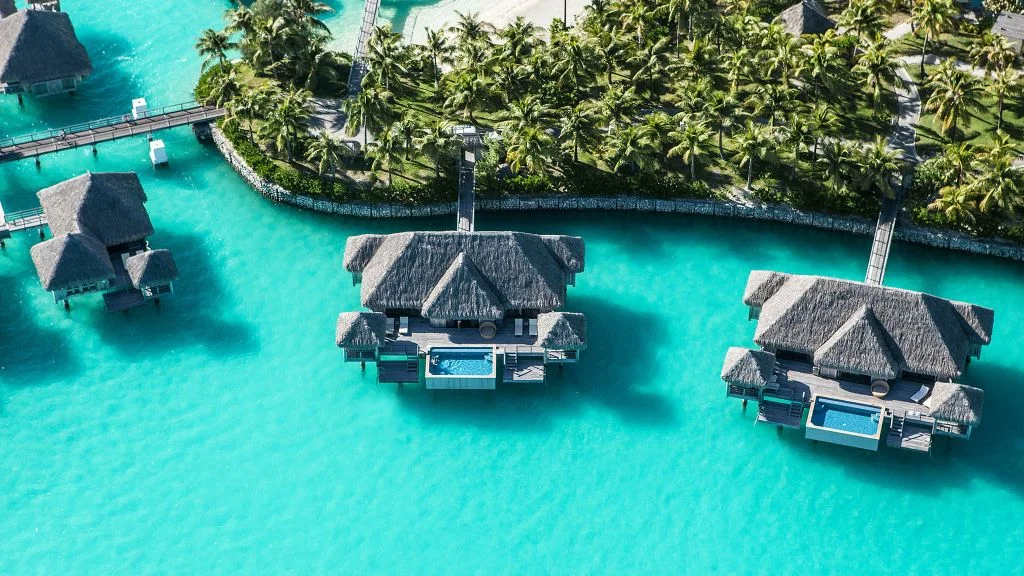
The term “best secluded overwater hotels united states” is often subject to significant semantic inflation. In popular discourse, it suggests a suspended, pier-based suite sitting atop pristine, tropical marine ecosystems. However, the reality within the borders of the United States involves a spectrum ranging from authentic, engineered structures in non-oceanic environments to terrestrial suites that utilize sophisticated design to create an illusion of aquatic immersion.
The fundamental misunderstanding in this space often stems from the conflation of proximity with structure. One may book a high-end property in the Florida Keys or coastal California that places the guest mere feet from the tide, yet this remains a shore-based experience. The true “exotic” variant—a bungalow built on piles over tidal salt water—is virtually non-existent in the U.S. due to the legislative and environmental barriers that govern coastal development. When users search for this term, they are often searching for a feeling of separation from the mainland, regardless of whether the floor joists are anchored in sand or bedrock.
Deep Contextual Background: The Physics of Exclusion
Why are true overwater structures so rare? The answer lies in the confluence of the Clean Water Act and the specific, often unforgiving, nature of American coastlines.
-
Hydrologic Volatility: Unlike the protected, shallow lagoons of Bora Bora or the Maldives, which are shielded by robust reef systems, the American coastline is subjected to significant storm surges, high-energy wave action, and extreme tidal fluctuations. Constructing a lightweight, pile-supported structure capable of withstanding a Category 4 hurricane is a cost-prohibitive engineering challenge.
-
Environmental Regulatory Frameworks: The permitting process for any structure in “navigable waters” is exhaustive. Agencies like the U.S. Army Corps of Engineers require rigorous proof that a development will not impede hydrologic flow or damage submerged aquatic vegetation (SAV). In most jurisdictions, the “no-net-loss” policy regarding wetlands makes the permanent installation of overwater piers a near-impossible bureaucratic hurdle.
-
Historical Development Patterns: The American model of coastal hospitality prioritizes beachfront erosion control and public access. Consequently, land-use policies have historically favored retreat and stabilization over protrusion.
Conceptual Frameworks and Mental Models
To evaluate high-end hospitality that flirts with water, one must use the correct heuristic. We propose three models for assessing these experiences:
-
The Proximity-to-Tide Ratio: This measures the literal distance between the guest’s primary living space and the mean high-tide line. A “high” score indicates a structure on the water’s edge, whereas a “low” score indicates a beach-front orientation.
-
The Engineered Illusion Model: This model evaluates the extent to which the resort uses architectural design (floor-to-ceiling glass, wrap-around decking, private docks, and overwater hammocks) to satisfy the desire for aquatic immersion without actually placing the bedroom over the water.
-
The Managed Ecosystem Model: This applies to properties situated on private, interior, or brackish-water lakes where wave action is controlled, permitting the construction of pile-supported, bungalow-style housing that mimics the “exotic” experience found internationally.
Key Categories and Variations
| Category | Typical Structural Basis | Primary Advantage | Trade-off |
| Lake-Based Bungalow | Engineered pile/pier | Authentic overwater feel | Lack of marine biodiversity/tides |
| Stilt-Shoreline Villa | Elevated land foundation | High stability and safety | Limited “floating” sensation |
| Private Island Suite | Perimeter of island/beach | Total exclusivity | Often land-anchored |
| Floating/Houseboat | Pontoon or hull-based | True aquatic mobility | Space and amenity limitations |
Planning, Cost, and Resource Dynamics
The cost of booking an experience categorized under “best secluded overwater hotels united states” is influenced by artificial scarcity. Because true overwater units are nearly absent, the few properties that effectively simulate this environment often command premium pricing.
-
Direct Costs: Nightly rates often range from $800 to $3,500+ depending on seasonality and the level of service integration (e.g., butler service, private plunge pools).
-
Opportunity Costs: Many travelers find that the investment required for these domestic “close-to-water” experiences is identical to, or higher than, the cost of flying to destinations where legitimate overwater bungalows exist. The decision-making process must weigh the value of travel time against the quality of the stay.
Risk Landscape and Failure Modes
The primary failure mode in this category is the Expectation-Reality Gap. A guest anticipating the crystalline clarity and marine life of the South Pacific will likely experience “sensory dissonance” when staying in an American lake-based bungalow or a stilt-supported Florida villa.
-
Environmental Risk: Proximity to the coast carries inherent exposure to weather events. Prospective guests should review the resort’s structural integrity and emergency evacuation protocols as part of their due diligence.
-
Maintenance Cycles: Hotels in high-salinity environments require near-constant maintenance. When researching properties, look for recent feedback regarding the condition of deck surfaces, exterior hardware, and plumbing to gauge the hotel’s commitment to operational excellence.
Governance, Maintenance, and Long-Term Adaptation
For the luxury traveler, the “governance” of a resort is evidenced by its Review Cycle. High-quality, sustainable resorts in sensitive coastal areas typically operate under strict adaptive management plans. They monitor the impact of their infrastructure on the local shoreline and adjust as necessary. A resort that maintains its exterior environment with visible care is generally a safer and more reliable choice than one that relies on dated infrastructure.
Measurement, Tracking, and Evaluation
When assessing whether a property meets the standard of the best secluded overwater hotels united states, utilize the following indicators:
-
Visual Connectivity: Does the room offer an unobstructed view of the water from the bed?
-
Acoustic Profile: Can the guest hear the water move, or is it buffered by significant land mass?
-
Privacy Index: Is the deck area isolated from neighbors? This is the primary indicator of whether the property has managed to replicate the seclusion of traditional overwater bungalows.
Common Misconceptions
-
“All overwater bungalows are the same.” False. A bungalow on a stagnant lake is fundamentally different from one in a tidal, current-fed marine environment.
-
“The U.S. has many hidden overwater options.” Incorrect. Due to the legal framework discussed, there are very few, if any, true overwater bungalows in the U.S. that rival the scale of international resorts.
-
“Overwater always means ocean.” Many of the closest approximations in the U.S. are built on freshwater or brackish man-made lagoons.
Conclusion
The search for the best secluded overwater hotels united states experience requires a shift in perspective. If one holds a rigid definition of a stilt-supported bungalow over a coral reef, the United States will consistently under-deliver. However, if the goal is to secure high-end, immersive coastal architecture that prioritizes water-side living, privacy, and architectural sophistication, the domestic market offers several robust, albeit different, solutions. The informed traveler succeeds not by seeking an exact replica of the Maldives, but by identifying those properties that have mastered the art of maximizing proximity and environmental harmony within the constraints of American coastal reality.