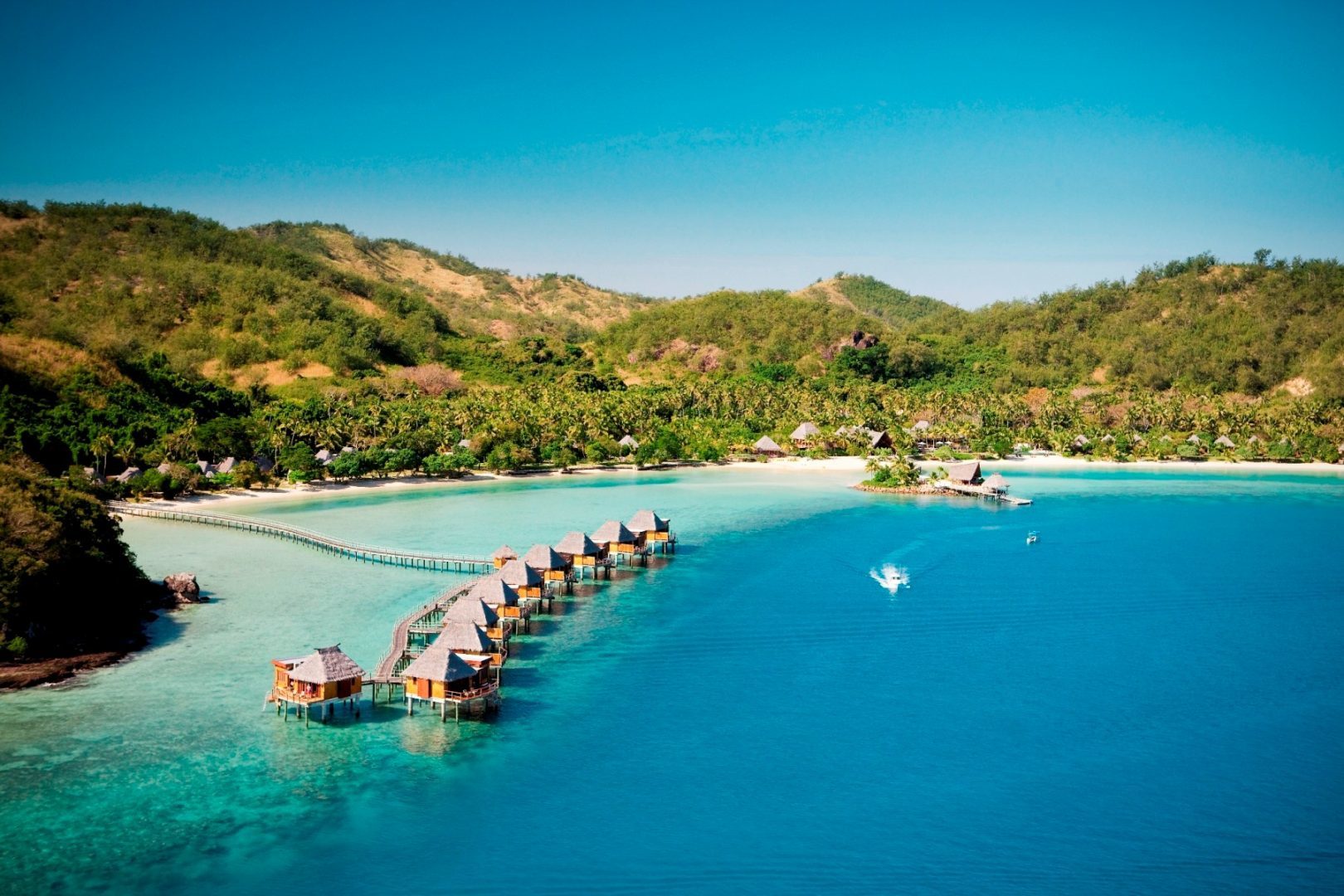
The overwater bungalow represents an architectural anomaly in the luxury hospitality sector. It occupies a liminal space where the terrestrial grid meets the open sea. While these structures are synonymous with elite leisure, they also function as isolated logistical nodes. The cost profile of such destinations is typically steep, driven by the inherent complexity of maintaining structures in saline, high-energy environments. Consequently, the perception exists that these locales are accessible only to the ultra-wealthy. This view, while rooted in marketing, often ignores the nuanced possibilities for strategic planning that allow for more controlled expenditures.
Accessing these environments is not solely about capital; it is about the mastery of logistical variables. Guests who approach their stay as an exercise in resource management find that the barrier to entry is often lower than the perceived market rate. The challenge lies in untangling the bundled services that resorts typically impose. By decoupling the accommodation from the ancillary activities, one gains leverage. This article explores the structural realities of aquatic hospitality to provide a robust framework for those seeking to maximize value in an environment designed to capture premium fees.
Achieving success in this arena requires a fundamental departure from standard travel planning. One must view the resort as a system with distinct, manageable components rather than a monolithic, all-inclusive expense. The following analysis dissects the operational mechanics of the overwater resort to reveal how the informed traveler can navigate costs without compromising the integrity of the experience.
Understanding “how to plan overwater hotels excursions on a budget”
The process of determining how to plan overwater hotels excursions on a budget is frequently undermined by a failure to distinguish between essential and artificial costs. Most resorts market their bungalows as part of a curated, high-margin ecosystem. This structure bundles basic accommodation with inflated service fees. A common misunderstanding assumes that all activities must be booked directly through the property’s concierge desk. In reality, resorts operate as geographic monopolies, yet the smart traveler identifies where that monopoly ends.
Oversimplification poses a significant risk to the budget-conscious visitor. Treating all overwater resorts as uniform entities ignores the drastic variance in their operational models. Some properties rely on massive, centralized logistical hubs, while others maintain a decentralized approach. Knowing how to plan overwater hotels excursions on a budget requires identifying which resorts facilitate independent exploration and which effectively prohibit it through restrictive access policies.
Furthermore, the risk of “false economies” is persistent. A guest might bypass a resort-arranged excursion to save money, only to find that the lack of proper logistical support—such as authorized dock access or safety insurance—creates a net loss in time, security, or capital. True mastery in planning involves identifying the point at which the cost of independence exceeds the value of convenience. By analyzing the resort’s local infrastructure, one can determine where independent planning is viable and where the resort’s bundled offering actually represents the most efficient use of resources.
Deep Contextual Background
The historical evolution of the overwater bungalow is marked by the transition from independent, community-based fishing structures to centralized, corporate-owned hospitality assets. In earlier decades, these bungalow clusters often relied on local logistics, where the movement of people and resources was deeply integrated into regional practices. As these properties were absorbed into global luxury chains, the operational model shifted toward total enclosure.
This professionalization resulted in the “resort-as-a-walled-garden” paradigm. Developers optimized these properties to ensure all guest consumption occurred within the resort’s controlled environment. This strategy effectively eliminated external competition for services like boat transfers and excursions. Consequently, the pricing for these activities detached from local market rates, instead reflecting the internal financial requirements of the resort. Understanding the history of this shift is vital. It reveals why the current system is structured to favor high-margin, bundled services, and why navigating it requires a deliberate, counter-intuitive approach to resource allocation.
Conceptual Frameworks and Mental Models
To effectively manage expenditures in high-cost aquatic settings, apply these conceptual models:
-
The Monopoly-Access Model: This posits that the resort’s pricing power is inversely proportional to the traveler’s ability to bypass the resort’s infrastructure. If the resort controls the only dock, their pricing for excursions is essentially non-negotiable.
-
The Bundling-Efficiency Paradox: While bundling is marketed as a convenience, it is primarily a tool for revenue capture. The informed traveler calculates the “unbundled” value of every service, comparing it to the cost of independent sourcing.
-
The Logistics-Redundancy Principle: Resorts charge premiums to cover the redundancy of their systems (e.g., backup boats, standby crews). Independent planning inherently sacrifices this redundancy. Therefore, the budget traveler is essentially trading security for cost savings, and this trade must be quantified.
Key Categories and Structural Variations
The following framework organizes aquatic excursions by their structural accessibility.
| Excursion Type | Accessibility Level | Cost Sensitivity | Planning Complexity |
| Resort-Internal | Full | Low | Minimal |
| Partnered-Local | Partial | Moderate | Moderate |
| Independently Sourced | Low | High | High |
| Public-Access | High | Very High | Extreme |
Decision logic suggests that the most effective way to lower costs is to identify properties located within, or adjacent to, public-access infrastructure. Resorts that are “seaplane-only” destinations offer zero flexibility, while those connected to local ferry networks allow for significant cost reduction.
Detailed Real-World Scenarios
-
The Dock Monopoly Failure: A guest attempts to save by hiring an independent fisherman to transport them. However, the resort forbids unauthorized vessels from docking, forcing the guest to pay a steep “docking fee.” The total cost ends up exceeding the resort’s official excursion price.
-
The Synchronized Transition: A visitor coordinates their stay to coincide with the resort’s own supply-delivery schedule. By piggybacking on the logistics of the resort’s own operations, they secure transit that is already funded, significantly lowering their own expenditure.
-
The Infrastructure Pivot: A traveler selects a resort on a larger island rather than a private-island resort. Because the location has a municipal dock, they can source local water-taxis, bypassing the resort’s private fleet pricing entirely.
Planning, Cost, and Resource Dynamics
The economic reality of aquatic excursions is defined by the high cost of maintaining specialized equipment in a maritime environment.
| Cost Component | Pricing Driver | Mitigation Strategy |
| Fuel & Taxes | Global energy/Local regulation | Consolidation/Group travel |
| Equipment Maint. | High salt-corrosion rate | Off-peak scheduling |
| Liability Insurance | Property-level protection | Stick to certified partners |
| Labor Readiness | 24/7 staff availability | Advance booking synchronization |
When learning how to plan overwater hotels excursions on a budget, it is essential to factor in the “indirect costs” of independent planning, such as the potential for lost days if logistics fail.
Tools, Strategies, and Support Systems
-
Bathymetric and Current Mapping: Understanding local tides ensures the budget traveler is not paying for transit during periods of high difficulty.
-
Regulatory Fee Databases: Tracking local maritime tax levies prevents being overcharged for mandatory “environmental fees.”
-
Synchronized Itinerary Mapping: Tools that align guest activities with resort staff rotations to minimize the need for special-request transit.
-
Group Aggregation Platforms: Informal networks that group travelers to share the cost of a private vessel charter.
Risk Landscape and Failure Modes
The primary risk in independent excursion planning is the loss of the resort’s “assurance safety net.” When you bypass the resort’s excursion desk, you also bypass their liability coverage. Failure modes include:
-
Logistical Stranding: An independent operator fails to return at the agreed time, and the resort offers no assistance.
-
Environmental Violation: Hiring an unvetted local operator who damages the reef can lead to massive legal fines for the guest.
-
Security Gap: Lacking proper transport documentation can lead to denial of re-entry at the resort’s secure port.
Governance, Maintenance, and Long-Term Adaptation
Mastery of this planning process requires a cycle of verification and adjustment:
-
Layered Verification: Before confirming independent transit, verify in writing whether the property allows third-party dock access.
-
Feedback Loops: Engage with the resort concierge early. Even if you plan independently, understanding their specific safety policies prevents administrative friction.
-
Climate-Ready Adjustments: Accept that extreme weather renders independent logistics impossible. Always include a “resort-safety buffer” in your budget.
Measurement, Tracking, and Evaluation
-
Leading Indicators: Experts look for property policies on external service providers and the proximity of the resort to public ferry hubs.
-
Lagging Indicators: Actual vs. projected expenditure per activity.
-
Documentation Example: A “Resource Log” tracking the cost of independent transit vs. the resort’s “rack rate” for similar services. This provides the empirical data necessary to decide how to plan overwater hotels excursions on a budget for the next cycle.
Common Misconceptions and Oversimplifications
-
Myth: The concierge desk is your enemy. Correction: The concierge is often the best source for identifying which local operators are certified to meet the resort’s security standards.
-
Myth: You can always hire a local fisherman for cheap. Correction: Without proper insurance and docking authorization, this is a financial and personal liability.
-
Myth: Resort fees are negotiable. Correction: They are usually based on fixed infrastructure costs; focus on avoiding the fee rather than reducing it.
-
Myth: All bungalow locations are equally isolated. Correction: Geography is the single biggest driver of excursion costs; choice of location is the best planning tool.
Ethical, Practical, or Contextual Considerations
The expansion of overwater resorts has profound impacts on local maritime ecosystems. When travelers seek ways to minimize costs, they should avoid operators who incentivize reef damage or contribute to pollution. Ethical travel is not an extra cost; it is a long-term investment. By prioritizing local operators who adhere to sustainable practices, one ensures that the marine assets being visited remain functional for future generations.
Conclusion
Understanding how to plan overwater hotels excursions on a budget requires a departure from the traditional mindset of a holidaymaker and an adoption of the mindset of a logistics manager. The resort experience is an orchestrated environment where every convenience is priced to recover the massive overheads of maritime operation. By identifying where this control is absolute and where it is permeable, the sophisticated traveler can craft an itinerary that is both financially responsible and physically secure. The goal is not to find a bargain, but to achieve a level of independence that allows the visitor to engage with the destination on their own terms. Success in this endeavor demands patience, research, and a clear understanding that the most valuable asset in an overwater environment is not the bungalow itself, but the operational knowledge of how it connects to the wider world.