The architecture of the overwater bungalow sits at the precise intersection of extreme isolation and high-intensity service. To exist above the water, detached from the terrestrial grid, is to accept a set of operational limitations that few other hospitality categories face. The allure of the bungalow often rests on the illusion of complete seclusion—a private space suspended between sky and sea. However, this illusion is sustained only by a hidden, complex, and high-stakes infrastructure of service. The ability to maintain a consistent luxury standard in a maritime environment, where salt air degrades materials daily and logistics are dictated by tide and current, separates the exceptional properties from the merely aesthetic.
Evaluating these assets requires moving beyond the visual, as the tangible quality of an overwater stay is rarely determined by the architecture itself. Rather, the difference lies in the invisible work: the efficiency of the utility conduits, the speed of the service delivery protocols, and the training of the staff responsible for bridging the distance between the shore-based hub and the aquatic suite. When the guest enters their room, they are participating in a carefully managed logistical performance.
This analysis deconstructs the mechanisms of elite aquatic hospitality. It is intended for those seeking to look past the marketing narratives to understand the functional realities that define true luxury in the marine sector. By examining the governance, planning, and risk management that underpin these operations, we can establish a framework for understanding what truly distinguishes the top tier of the industry.
Understanding “compare overwater hotels luxury services”
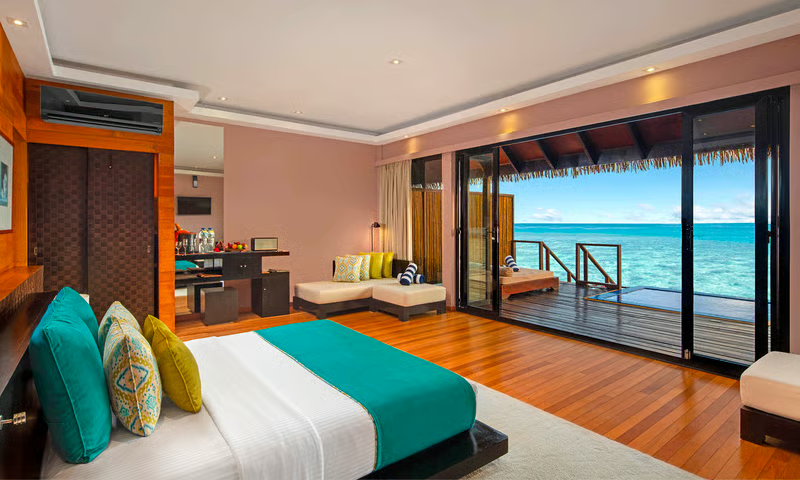
The professional imperative to compare overwater hotels luxury services stems from the realization that price points in this sector often decouple from functional value. Because the logistics of maintaining a structure over open water are inherently expensive, developers frequently struggle to balance the high overhead of basic operations with the extreme service expectations of the ultra-luxury market. A common misunderstanding involves the assumption that “luxury” is a static, universal metric. In reality, service in this environment is context-dependent.
Oversimplification poses the greatest threat to a comprehensive evaluation. If an observer attempts to compare overwater hotels luxury services by simply reviewing guest satisfaction scores or architectural photographs, they will invariably miss the systemic constraints of the property. Is the “butler service” an automated, app-based communication system, or is it a dedicated, on-call physical presence? Does the property maintain its own private reverse-osmosis water plant, or does it rely on barge deliveries? These distinctions dictate the reliability of the experience.
To successfully compare overwater hotels luxury services, one must apply a multi-perspective analysis. This includes evaluating the service-to-guest ratio, the redundancy of utility systems, and the flexibility of the resort’s logistics chain. A property might look perfect, but if its food-and-beverage service relies on a single supply boat that is frequently delayed by tidal shifts, the “luxury” service is prone to catastrophic failure. The goal of this article is to provide the analytical tools required to identify resorts that have solved these logistical equations, transforming their structural isolation into a strategic advantage.
Deep Contextual Background
The evolution of overwater hospitality has followed a trajectory from rustic, beach-shack utility to highly engineered, branded luxury. In the mid-20th century, the concept was nascent, defined by simple bamboo structures that required minimal service. The “service” provided was essentially access to the water; anything else was the responsibility of the guest. As the demand for luxury grew in the 1980s and 1990s, the industry began to shift, realizing that high-net-worth travelers would pay a premium for the bungalow, provided it came with the convenience of a five-star hotel.
This shift necessitated a massive investment in infrastructure. Resorts began to build massive, pier-based utility systems to bring electricity, fresh water, and waste management out to the suites. Service protocols also had to adapt. Staff could no longer simply walk to a room; they needed golf carts, electric buggies, or even boat-based delivery systems to manage the physical distance. The historical tension between the fragility of the marine ecosystem and the demands of modern luxury resulted in a maturation of the sector, where environmental compliance became just as important as guest satisfaction. Today, the most successful properties are those that have integrated sustainability into their service models, treating the lagoon not as an amenity to be exploited, but as the core asset to be protected.
Conceptual Frameworks and Mental Models
To analyze and compare overwater hotels luxury services effectively, one should apply the following frameworks:
-
The Logistics-Integrity Model: This model suggests that the quality of service is directly proportional to the stability of the logistical chain. If the supply chain (energy, water, food) is fragile, service will inevitably be inconsistent. Resilience in this model is defined by onsite redundancy and autonomy.
-
The Service-Isolation Paradox: This mental model examines the tension between the guest’s desire for privacy and the resort’s need to provide service. Elite properties solve this by implementing “invisible” service infrastructures—using technology and hidden pathways to ensure staff can deliver luxury without infringing on the guest’s perceived isolation.
-
The Asset-Lifecycle Framework: Service is not a static offering; it degrades over time along with the infrastructure. A resort that maintains its service standards must have a perpetual capital expenditure (CapEx) plan that addresses the rapid corrosion rates of salt-air environments. Comparing properties requires looking at how they manage this lifecycle, not just their current offerings.
Key Categories and Structural Variations
The following breakdown identifies the primary service models encountered when one seeks to compare overwater hotels luxury services across different geographic markets.
| Service Category | Operational Protocol | Primary Constraint | Best For |
| Butler-Centric | Dedicated staff for every unit | High labor costs; recruitment | Ultra-High Net Worth |
| Technological-Hybrid | App-based/AI requests | Relies on robust IT infrastructure | Efficiency-seeking guests |
| Concierge-Cluster | Shared service per pier/zone | Slower response times | Moderate-cost luxury |
| Automated-Minimalist | Self-service focus | Requires high-quality room tech | Privacy-focused stays |
Decision logic for the sophisticated guest dictates that the “Butler-Centric” model is the gold standard for high-intensity luxury, provided the resort has the labor management systems to support it. Properties that lack the internal infrastructure to support a 1:1 butler-to-guest ratio often degrade into the “Concierge-Cluster” model, which inevitably dilutes the personalized nature of the service.
Detailed Real-World Scenarios
-
The Supply Chain Collapse: A property in a remote archipelago relies on a weekly barge for fresh produce. A storm disrupts this schedule. A top-tier resort has an onsite hydroponic system and cold storage capacity to bridge the gap. A lower-tier resort forces menu changes, revealing the fragility of its “luxury” service.
-
The Utility Surge: During a peak holiday season, the resort reaches 100% capacity. The electrical grid, stressed by air conditioning demand, experiences a brownout. The property with a robust, decentralized microgrid (solar/battery/backup generator) maintains service continuity, while the competitor loses air conditioning and desalination capability, leading to an immediate service failure.
-
The Privacy-Service Conflict: A guest requests total privacy. The resort’s service model requires daily cleaning and minibar restocking. The superior resort utilizes a “non-intrusive service menu” where guests can schedule interventions, preventing staff intrusion. The inferior resort mandates daily entry, proving that its service model is rigid and fails to adapt to the core promise of the overwater experience.
Planning, Cost, and Resource Dynamics
The economic profile of these services features high overheads and constant variability.
| Cost Factor | Impact on Service Quality | Variability |
| Labor/Training | High (Critical) | High (Staff turnover) |
| Maintenance/Corrosion | High (Invisible) | Constant (Salt exposure) |
| Logistics/Supply | High (Infrastructure) | Predictable (Seasonal) |
| Utility/Energy | Moderate (Operational) | Predictable |
When one attempts to compare overwater hotels luxury services, the variability of labor training is the most significant differentiator. Properties that invest in long-term staff retention programs—providing onsite housing, career progression, and competitive benefits—invariably deliver more consistent service than those relying on short-term contract labor.
Tools, Strategies, and Support Systems
-
Distributed Energy Resources (DERs): Advanced properties use solar arrays and battery storage to ensure that luxury amenities (climate control, desalination) never fail, regardless of the grid status.
-
Cryptographic Communication Protocols: Top-tier resorts replace legacy phone systems with encrypted, device-agnostic communication platforms that allow guests to interact with staff without hardware limitations.
-
Real-Time Predictive Maintenance Systems: Sensor networks on pilings and utility conduits alert maintenance crews to structural degradation before it disrupts the guest experience.
-
Integrated Inventory Management: Software that links the guest’s preferences (room temperature, pillow firmness, beverage choice) directly to the back-of-house logistics, ensuring personalization at scale.
Risk Landscape and Failure Modes
Service failure in the overwater sector is rarely a single event; it is a compounding phenomenon. The taxonomy of risk includes structural, utility, and human-capital failures. If a resort fails to address the “hidden” risk—such as the gradual accumulation of salt on electrical contacts—it will eventually face a “cascading” failure where utility loss leads to service loss. Comparing properties effectively requires the observer to look for evidence of preventative risk management. Does the property have visible evidence of maintenance schedules? Do the utility areas look organized and professional, or are they chaotic? These are proxies for the quality of the service management system.
Governance, Maintenance, and Long-Term Adaptation
Governance requires a culture of “preventative vigilance.” This includes:
-
The Layered Checklist: A rigorous system requiring structural, utility, and service checks on weekly, monthly, and annual cycles.
-
Adjustment Triggers: Pre-defined threshold levels (e.g., a 10% increase in utility consumption per suite) that automatically initiate a full audit.
-
Climate-Ready Design: Engineers must build structures to accommodate predicted sea-level rise, allowing for structural jacking or foundation augmentation without disrupting the service continuity.
Measurement, Tracking, and Evaluation
-
Leading Indicators: Experts track changes in current speeds, localized corrosion rates on metallic fixtures, and early-warning moisture detection in structural voids.
-
Lagging Indicators: Managers assess the repair-to-occupancy ratio and the total environmental footprint of the property.
-
Documentation Example: An “Asset Integrity Map” provides a visual representation of the structural health of every unit, updated after every inspection cycle. This is the ultimate tool for those looking to compare overwater hotels luxury services, as it demonstrates how seriously the management takes the long-term viability of the product.
Common Misconceptions and Oversimplifications
-
Myth: High price always equals high service quality. Correction: Price often correlates with architectural cost, not service training or logistical reliability.
-
Myth: Wood is always “natural” and thus low-risk. Correction: Untreated wood in a tropical, saline environment constitutes a highly volatile, high-maintenance choice that threatens service continuity.
-
Myth: You can “insure” away the risk. Correction: Insurance may cover the financial loss of a collapse, but it cannot restore brand equity or a destroyed marine habitat.
Ethical, Practical, or Contextual Considerations
The expansion of overwater hotels carries significant environmental weight. When selecting a resort, travelers must consider the impact of their patronage. Properties that participate in “greenwashing”—using sustainability as a marketing veneer while failing to implement robust, independent water-treatment and current-management systems—pose a reputational and ethical risk to the traveler. Selecting properties that align with verifiable marine-integrity certifications is not just an ethical preference; it is a long-term strategy for ensuring the asset itself remains viable and attractive for future visits.
Conclusion
Understanding the landscape regarding the best aquatic resorts requires discipline, foresight, and a cynical appreciation for the underlying economics of hospitality. The ability to compare overwater hotels luxury services effectively is the difference between a high-value experience and a high-cost failure. These properties provide beauty, but they also remain precarious. Their survival depends on the recognition that human luxury must respect the natural constraints of the tide. By prioritizing rigorous engineering, proactive maintenance, and systemic risk monitoring, stakeholders can build assets that remain both profitable and persistent.