The modern overwater bungalow stands as an architectural paradox, representing a high-stakes convergence of hospitality, marine engineering, and environmental stewardship. While these structures are frequently marketed as the pinnacle of leisure, they exist in a state of perpetual vulnerability, suspended above fluctuating tides and exposed to a highly corrosive saltwater environment. True mastery of this typology requires a departure from superficial aesthetic assessments, shifting instead toward an analytical understanding of how these habitats reconcile the demand for luxury with the physical limits of a marine foundation.
Developing or evaluating these assets necessitates a granular view of their lifecycles. A property that succeeds in the long term does so not by accident, but through rigorous adherence to structural integrity and proactive utility management. Beneath the serene exterior of a resort, a complex, interconnected infrastructure must function continuously to maintain the illusion of isolation. Without such systems, the structural, biological, and economic foundations of the project inevitably drift toward decay.
This guide dissects the intricate landscape of overwater hospitality. It moves beyond the marketing veneer to provide a definitive reference for those seeking to understand, build, or invest in these unique assets. By analyzing the intersection of technical performance and experiential design, we establish the criteria for what constitutes a high-performance aquatic environment, resilient enough to endure the stresses of both time and the sea.
Understanding “best overwater hotels options”
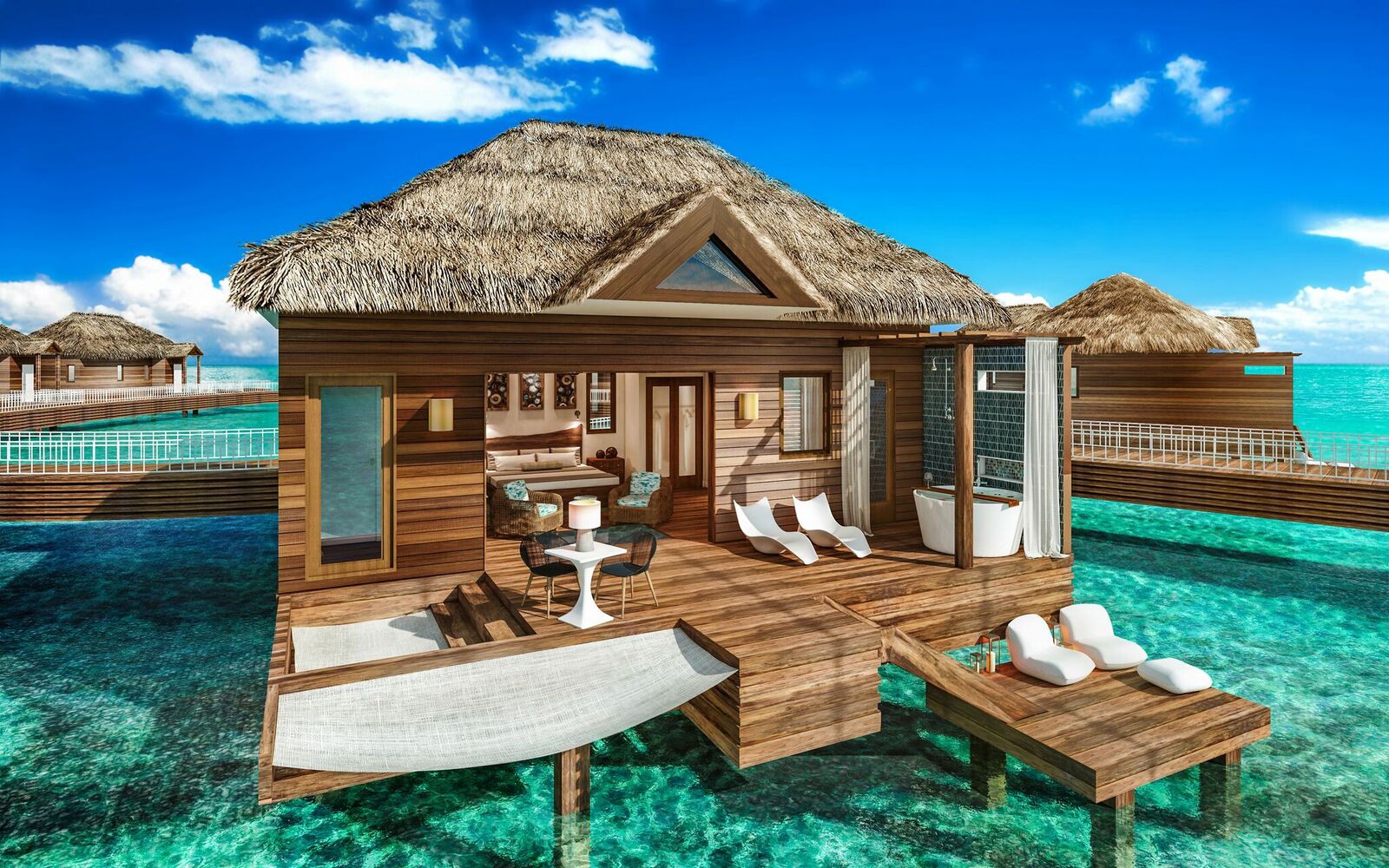
Navigating the market for the best overwater hotels options requires a departure from traditional real estate criteria. The term itself is often reduced to a simple ranking of luxury features, such as glass-bottom floors or private plunge pools. However, this oversimplification obscures the reality that the performance of these hotels is fundamentally dictated by their engineering and site-specific environmental conditions. A structure optimized for the calm, shallow waters of a Maldivian atoll will demonstrate completely different behavioral patterns if transplanted to the higher tidal energy found in the Caribbean or the South Pacific.
Common misunderstandings center on the belief that these properties are modular. In practice, the most resilient assets are bespoke creations that integrate with the specific bathymetry, current velocity, and coral health of their local reef. The risk of treating these options as interchangeable lies in the underestimation of structural fatigue. If a developer fails to account for the corrosive nature of the splash zone or the hydraulic pressure of storm surges, the resulting maintenance costs will far exceed any potential revenue growth.
Ultimately, identifying the best overwater hotels options involves assessing whether the project design prioritizes the long-term health of the marine ecosystem. If the development alters the natural flushing patterns of a lagoon, it inadvertently destroys the very natural beauty it aims to monetize. Therefore, a definitive choice must balance structural, environmental, and operational factors with equal weight.
Historical and Systemic Evolution
The evolution of overwater housing tracks a trajectory from primitive, lightweight shelters toward complex, industrial-grade marine engineering. In the 1960s, these structures primarily served as temporary, low-impact dwellings. They relied on simple timber piles and thatched roof technology. As demand scaled, the industry attempted to replicate standard hotel room layouts on water, which exposed significant structural weaknesses.
Systemically, the field has transitioned from artisanal construction to intensive maritime design. Engineers now employ advanced corrosion-resistant alloys, deep-sea pile driving techniques, and integrated waste management conduits that ensure the property functions as a fully contained municipality. This shift was not merely a matter of luxury; it was a necessary response to the harsh realities of sea-level rise and increasing climate volatility, which forced a move away from fragile, near-surface foundations.
Conceptual Frameworks and Mental Models
To assess these projects, one should employ several rigorous frameworks that highlight the interplay between man-made luxury and the natural environment:
-
The Logistical Tether Principle: Even the most secluded bungalow remains tethered to a central utility hub. The project’s viability is inversely proportional to the complexity of these connections. Increased distance from the hub leads to higher friction, slower service, and more frequent infrastructure failure.
-
The Tidal Flushing Model: Overwater developments inevitably disrupt water flow. A successful plan utilizes hydrodynamic modeling to ensure that construction does not create stagnant zones, which would harbor bacteria and degrade the surrounding reef ecosystem.
-
The Exposure-Cycle Hierarchy: One must evaluate materials based on their specific placement: submerged (corrosion-heavy), splash zone (aerobic corrosion-heavy), and atmospheric (UV/salt-spray heavy). A robust project applies different maintenance protocols for each of these distinct environmental tiers.
Key Categories and Structural Variations
The following table differentiates the primary archetypes found in high-end developments:
| Category | Typical Structural Foundation | Ideal Environmental Context | Key Operational Strength |
| Fixed Pile | Driven Steel/Concrete | Shallow/Calm Lagoons | High structural rigidity |
| Floating Pontoon | Buoyant Modular Chassis | Deep Water/Variable Tides | Adaptability to sea-level flux |
| Artificial Island | Land-Fill/Reclaimed Base | Low-Tidal Reefs | Superior utility distribution |
| Hybrid Cantilever | Partially Land-Attached | Protected Coves | Reduced marine footprint |
Realistic decision logic dictates that site selection must precede design. A common failure is attempting to force a rigid pile-driven design into a deeper, high-current zone, which inevitably leads to foundation settling and long-term structural instability.
Detailed Real-World Scenarios
-
The High-Current Challenge: A developer attempts a large-scale project in an area with unexpected cross-currents. Without proper bracing, the bungalows experience harmonic vibrations during high-wind events. The second-order effect is a significant drop in guest comfort, as the noise becomes intolerable.
-
The Utility Breach: A sub-sea sewage conduit develops a micro-leak in a sensitive reef area. The failure mode is not immediate, but cumulative. Over time, the localized phosphorus spike causes algae growth, which eventually suffocates the local coral, ruining the primary guest attraction.
-
The Maintenance Gap: A property relies on a rotating crew to manually transport water and remove waste by boat. During the monsoon season, this becomes impossible. The resort is forced to close for weeks, proving that a lack of automated, integrated utility infrastructure is a critical business failure.
Planning, Cost, and Resource Dynamics
The economic reality of selecting or developing the best overwater hotels options is characterized by high, front-loaded capital expenditures and steep, non-linear maintenance curves.
| Cost Component | Relative Impact | Variability Factor |
| Marine Engineering & Piling | 35% | High (Depth/Soil type) |
| Utility Infrastructure | 25% | Very High (Distance/Technology) |
| Corrosion-Resistant Materials | 20% | Moderate (Market flux) |
| Environmental Monitoring | 10% | Constant (Long-term) |
Resource management must account for the reality that specialized labor, such as marine divers and specialized electrical contractors, often carries a significant premium in remote regions. Failing to budget for a consistent, on-site technical team is the most frequent cause of project bankruptcy.
Tools, Strategies, and Support Systems
-
Benthic Mapping Software: Essential for identifying where piles can be placed with zero-impact on live coral.
-
Hydrodynamic Simulation Modeling: Predicts how structures will affect water currents and potential sediment buildup.
-
Real-time Sensor Networks: Deployed across the property to monitor structural stress, salinity levels in piping, and water quality around the bungalows.
-
Modular Utility Prefabrication: Allows for “plug-and-play” repairs, reducing the time required for major maintenance interventions.
Risk Landscape and Failure Modes
The failure of an overwater asset rarely stems from a single event. It is almost always the result of compounding risks. A failure in the plumbing might be minor, but if it is coupled with a lack of access for rapid repair, it becomes a systemic catastrophe. Categorizing these risks into structural, ecological, and operational buckets allows for the creation of a tiered response plan, ensuring that a physical failure does not evolve into a complete loss of brand equity.
Governance, Maintenance, and Long-Term Adaptation
Governance of these assets requires a “living” management plan. The cycle should include:
-
Weekly Audit: Visual inspection of all exterior piles and connection points.
-
Monthly Analysis: Water quality testing at all major points of discharge and intake.
-
Annual Stress Test: Professional review of foundational loading, particularly after hurricane or storm seasons.
Furthermore, developers must build in a “graceful failure” or upgrade path. This means designing the structures so that the decking can be stripped and the internal systems replaced without dismantling the entire pile foundation.
Measurement, Tracking, and Evaluation
Evaluation must go beyond simple occupancy metrics. While revenue performance is important, it is a lagging indicator. Leaders should track:
-
Leading Indicators: Frequency of minor mechanical interventions, trends in marine biodiversity counts (if declining, this is an early warning of future asset degradation), and the rate of structural fatigue in high-stress zones.
-
Qualitative Signals: Guest feedback regarding the “freshness” of the property and the absence of mechanical noise or odor.
Documentation examples include a centralized “Asset Health Ledger,” which tracks every maintenance event per unit, and a “Benthic Recovery Log,” documenting the health of the sea floor beneath the bungalows.
Common Misconceptions and Oversimplifications
-
Myth: Overwater hotels are naturally sustainable. Reality: They are inherently high-impact. They are only as sustainable as the engineering invested into their waste, energy, and water-treatment systems.
-
Myth: The best overwater hotels options require wood decks. Reality: Modern, high-performance composites are increasingly standard, as they significantly reduce the need for toxic chemical sealants that leach into the lagoon.
-
Myth: They are permanent structures. Reality: Even the strongest marine-grade structures have a finite lifespan. A professional plan always includes an eventual decommission or “rebirth” strategy.
Ethical and Practical Considerations
The ethical dimension of this industry involves the responsibility to the local ecosystem. Every pile driven into the seabed represents a permanent alteration of a habitat. Consequently, the best overwater hotels options are those that provide measurable benefits to local reef conservation efforts. If the development does not actively improve the biodiversity of its surrounding waters—for instance, through the deployment of artificial reef structures or coral nursery programs—it operates on a deficit of ecological goodwill that is increasingly viewed as unsustainable by the modern traveler.
Conclusion
The construction and evaluation of the best overwater hotels options constitute an exercise in extreme, disciplined planning. These properties occupy the thin boundary between human luxury and environmental fragility. The success of such a project is not measured by the initial visual impact, but by the property’s ability to maintain structural integrity and ecological health over decades of exposure. By adopting rigorous mental models, prioritizing logistical efficiency, and committing to proactive maintenance, one ensures that these structures remain viable. Ultimately, the authority in this space belongs to those who view the ocean not merely as a backdrop, but as a dynamic, unforgiving partner in the architectural process.