The overwater bungalow occupies a unique position in modern architecture, serving as both a sanctuary and an exposed outpost in high-energy maritime environments. While these structures define the tranquil lagoons of the South Pacific and the Maldives, their adaptation for the United States market presents a set of complexities rarely addressed in mainstream tourism literature. The allure of the lagoon is powerful, yet it often blinds travelers to the systemic realities of building on—and living above—the tide. Success in this niche requires more than aesthetic curation; it demands a discipline of rigorous evaluation and a clear understanding of why authentic overwater structures remain a rarity within U.S. borders.
To define the reality of these stays requires a precise, and often sobering, look at geography, regulation, and the economic structure of luxury travel. Because many coastal regions in the United States lack the extensive, protected, shallow-water atoll formations found in iconic tropical paradises, the reality of these stays often differs from the marketing imagery. When travelers identify properties marketed as aquatic escapes, they almost invariably encounter shore-connected structures, pier-supported suites, or highly controlled lagoon environments that mimic the experience without the inherent structural independence of a true stilt-supported bungalow.
Understanding this distinction serves as the cornerstone of informed travel planning. By focusing on underlying engineering, operational realities, and the true components of luxury, one can identify properties that genuinely approximate the aquatic experience while appreciating why the broader proliferation of such assets faces strict legal and geomorphological barriers. This article provides the analytical framework necessary to evaluate these destinations, focusing on the infrastructure, sustainability, and logistical foundations that define a truly premium, resilient aquatic stay.
Understanding “best private overwater hotels in the us”
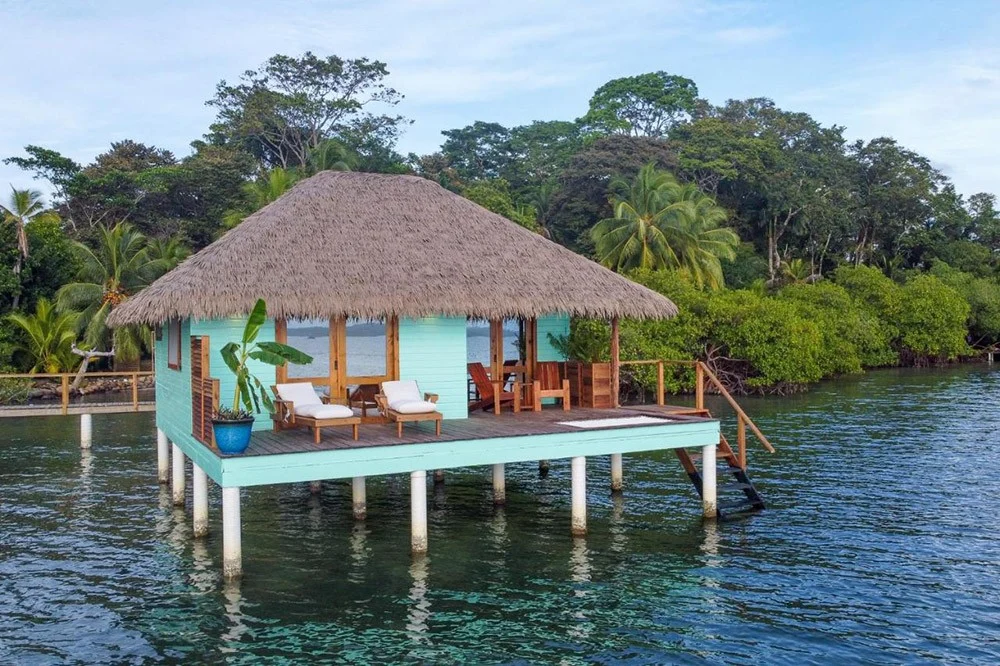
The search for the best private overwater hotels in the us frequently suffers from a fundamental misunderstanding of domestic geography and maritime law. In the global market, an overwater bungalow stands as an independent unit surrounded by water, connected to the shore only by a pier. In the United States, however, the term “overwater” is often applied to a wide spectrum of accommodations, ranging from true stilt-bungalows in artificial lakes to rooms situated on piers or near coastal waters.
A common misunderstanding suggests that these properties are universally luxurious and environmentally benign. In reality, the quality of an “overwater” claim in the U.S. is determined by the resort’s ability to maintain its infrastructure against salt and storm damage while navigating complex permitting for construction over water—which is often prohibited or heavily restricted due to environmental protections and tidal ownership laws. The primary risk in developing these plans is the failure to distinguish between “aesthetic overwater” (units that sit over water but are connected to land or sit in sheltered inland lagoons) and “engineered overwater” (units that function as independent habitats above a healthy marine ecosystem).
Oversimplification acts as a primary catalyst for experiential failure. Treating the selection of an aquatic stay as a standard land-based commodity ignores the difference in isolation, privacy, and environmental connection. An effective approach requires the discerning guest to examine the structural connectivity of the unit. Does it sit detached? Does it float above an active, healthy marine ecosystem? Or does it merely sit over a pool or a modified, shallow artificial lagoon? Recognizing these nuances proves essential for any traveler seeking a genuine, rather than a performative, overwater stay.
Deep Contextual Background
Historically, the overwater bungalow evolved to maximize ocean frontage where land scarcity existed, such as on small coral atolls in the South Pacific. Early efforts often ignored the long-term impact of salt on materials and the broader consequences of dredging and lagoon modification. Consequently, many early structures became “dead” assets that required constant, inefficient patching. The industry has since moved toward higher-grade materials and complex, data-reliant construction methodologies.
Systemically, this has forced developers to adopt a highly cautious approach to aquatic expansion in the U.S. Where early, informal projects sometimes expanded without consideration for water flow, current professional standards demand that developers model every addition for its impact on the local ecosystem. This evolution mirrors the broader professionalization of the maritime engineering sector. Today, the industry prioritizes predicting failure before it occurs, rather than reacting once the environment begins to reclaim the structure, yet the gap between high-level engineering and marketing rhetoric remains wide.
Conceptual Frameworks for Asset Resilience
To manage expectations regarding the best private overwater hotels in the us, one should apply several conceptual lenses:
-
The Marine-Stability Model: This model posits that developers must design assets with a “zero-interference” goal regarding the local current. If structures obstruct natural water movement, the resulting stagnation creates a high-risk zone for biological decay.
-
The Logistical Tether Principle: The efficiency of an overwater asset decreases as its distance from the central hub increases. Risk management dictates that operators must centralize utilities to avoid exposed, sub-sea conduits that are difficult to access.
-
The Environmental Carrying Capacity Model: This framework suggests that the number of overwater units a lagoon can support relies on its natural flushing rate. If structures exceed this limit, the environment—the core asset the guest is paying to experience—will degrade rapidly.
Key Categories and Structural Variations
| Category | Typical Foundation | Primary Vulnerability | Mitigation Strategy |
| Fixed Pile | Driven Steel/Timber | Sediment erosion | Deep-well anchoring |
| Floating/Pontoon | Buoyant Chassis | Storm-surge drift | Dual-anchor redundant systems |
| Reclaimed-Base | Land-Fill/Concrete | Hydrostatic uplift | Permeable foundation drainage |
| Pier-Attached | Shore-Connected | Shoreline recession | Set-back engineering |
Decision logic dictates that the choice of foundation serves as the greatest determinant of long-term risk. Projects that prioritize aesthetic preference over geomorphological suitability almost always experience premature structural degradation, often despite bold claims of sustainability.
Detailed Real-World Scenarios
-
The Hydrodynamic Failure: A resort builds in a lagoon where staff only mapped current patterns during the calm season. During a seasonal surge, the increased flow exerts lateral force on the pilings. This leads to microscopic cracks in the utility conduits. The failure remains invisible until pollution manifests, at which point the property’s reputation suffers.
-
The Corrosive Cascade: Salt-spray and high humidity degrade a non-standard HVAC bracket. The subsequent leak introduces moisture into the structural cavity, allowing dry-rot to compromise the load-bearing capacity of the joists. This demonstrates that no material remains exempt from rigorous inspection.
-
The Logistic Bottleneck: A remote project relies on a single supply boat for all maintenance needs. A mechanical failure in that boat creates a 10-day repair delay. If a major utility failure occurs during this window, the resort faces a total loss of operations.
Planning, Cost, and Resource Dynamics
The economic profile of these assets features high upfront costs and a non-linear maintenance curve.
| Factor | Cost Impact | Variability |
| Foundation Engineering | High | Extreme (Depth/Substrate) |
| Corrosion Protection | Moderate | Constant (Salt-load) |
| Logistics/Staffing | Moderate | Very High (Distance/Seasonal) |
| Environmental Monitoring | Moderate | Predictable |
Learning about the best private overwater hotels in the us helps the stakeholder understand the cost-to-value ratio. These experiences carry high prices because the infrastructure required to keep them operational in a marine environment far exceeds standard land-based construction costs.
Tools, Strategies, and Support Systems
-
Bathymetric and Current Mapping: Engineers must use this for site-specific structural design.
-
Cathodic Protection Systems: These prove essential for preventing galvanic corrosion in steel-based foundations.
-
IoT-Enabled Leak Detection: Real-time monitoring of all sub-sea conduits prevents environmental disasters.
-
Redundant Utility Systems: Designers must ensure that power, water, and waste-handling remain decentralized across the property.
Risk Landscape and Failure Modes
Risk in the overwater sector compounds over time. A small structural fault leads to water ingress; moisture triggers microbial or chemical degradation; degradation eventually compromises foundation integrity. Operators must break this sequence through rigorous, granular inspection cycles. They should rely on systemic, data-driven integrity reports rather than mere visual cues or marketing campaigns.
Governance, Maintenance, and Long-Term Adaptation
Governance requires a culture of “preventative vigilance.” This includes:
-
The Layered Checklist: A system requiring structural, utility, and environmental checks on a weekly, monthly, and annual basis.
-
Adjustment Triggers: Pre-defined threshold levels (e.g., vibration in pilings) that automatically initiate a full audit.
-
Climate-Ready Design: Engineers must build structures to accommodate predicted sea-level rise, allowing for structural jacking or foundation augmentation.
Measurement, Tracking, and Evaluation
-
Leading Indicators: Experts track changes in current speeds, localized corrosion rates on metallic fixtures, and early-warning moisture detection in structural voids.
-
Lagging Indicators: Managers assess the repair-to-occupancy ratio and the total environmental footprint of the property.
-
Documentation Example: An “Asset Integrity Map” provides a visual representation of the structural health of every unit, updated after every inspection cycle.
Common Misconceptions and Oversimplifications
-
Myth: Maintenance is an off-season activity. Correction: Corrosion acts as a 24/7 process that does not wait for the tourism cycle to end.
-
Myth: Wood is always “natural” and thus low-risk. Correction: Untreated wood in a tropical, saline environment constitutes a highly volatile, high-maintenance choice.
-
Myth: You can “insure” away the risk. Correction: Insurance may cover the financial loss of a collapse, but it cannot restore brand equity or a destroyed marine habitat.
Conclusion
Understanding the landscape regarding the best private overwater hotels in the us requires discipline, foresight, and humility before the power of the marine environment. These resorts provide beauty, but they also remain precarious. Their survival depends on the recognition that human luxury must respect the natural constraints of the tide. By prioritizing rigorous engineering, proactive maintenance, and systemic risk monitoring, stakeholders can build assets that remain both profitable and persistent, while avoiding the pitfalls of performative sustainability. Ultimately, these structures stand as a testament to human ingenuity rather than a warning of its arrogance.